Getting rid of waste legally mostly comes down to three things: the person taking it away is allowed to, it goes somewhere that can legally accept it, and there is a record to prove it. Do those, and you have very little to worry about.
For the practical stages around a domestic clearance, read our step-by-step house-clearance guide. This article stays focused on duty of care, carrier checks and lawful disposal.
Quick answer
To dispose of waste legally, use a registered waste carrier or an authorised council route, ask where the waste will go, keep a receipt or invoice, and make sure hazardous items go through the right specialist route. If the waste is from a business, you also need proper waste transfer note records.
Questions this article answers
Can I be fined if someone else fly-tips my waste?
How do I check a waste carrier licence?
Do I need a waste transfer note?
Is household waste different from business waste?
Can I take commercial waste to the tip?
What should I do with hazardous waste?
Why are some waste removal quotes much cheaper than others?
What proof should I ask for after collection?
What should I do if I suspect my waste has been fly-tipped?
Before handing waste over, check:
- The collector is a registered waste carrier
- The company name and contact details are clear
- They can say where the waste is going
- You will receive a receipt, invoice or waste transfer note
- Hazardous items have been identified before collection
- The price makes sense compared with other legal disposal routes
What does legal waste disposal actually mean?
It means your waste is collected, carried and dealt with by people and sites that are authorised to handle it, with the right checks made and records kept where the law asks for them. The reason this matters to you, rather than only to the company you hire, is simple. In law, waste stays the responsibility of the person who produced it, and that responsibility does not fully end the moment a van pulls away. If your waste is dumped, the trail can lead back to your door.
A quick note before we start. This is general information to help you make good decisions, not legal advice, and the figures below apply mainly to England. Scotland, Wales and Northern Ireland follow the same broad rules but differ on penalties and some of the detail. If in doubt, check the official links in this article or ask your local council.
Why should you care how your waste is handled?
Because the consequences tend to land on the person who created the waste, not just on whoever tipped it in a lay-by. A few things are worth knowing:
- Fly-tipping is a criminal offence. Those convicted can face an unlimited fine and, in the most serious cases, up to five years in prison.
- Householders have a legal duty of care. You are expected to take reasonable steps to be sure your waste only goes to someone authorised to take it.
- If waste is traced back to you and you cannot show you checked who took it, councils in England can issue a fixed penalty of up to £600 for a household duty of care breach. The fixed penalty for fly-tipping itself can reach £1,000.
- There is a real environmental cost behind all of this, from leaking fridges to chemicals reaching watercourses and waste burned in the open.
Those penalty levels were raised by the government in 2023, and you can read the announcement on GOV.UK. The part that catches people out is that paying in good faith is not, on its own, a defence. What decides it is whether you checked who you handed your waste to.
What are your responsibilities as a householder?
You do not need to become an expert. You just need to be a bit careful about who you hand your waste to.
- Check who is taking it. A genuine operator will not mind giving you their details.
- Treat a very low price as a reason to ask more questions, especially with collectors who advertise on local social media with little more than a mobile number.
- Ask two plain questions: are you a registered waste carrier, and where will the waste go? Both should get a straight answer.
- Keep a little proof. A receipt, an invoice, a booking confirmation, the messages you swapped, even a quick photo of the van and its number plate. If your waste ever turns up dumped, that record is what protects you.
What are the rules for business waste?
Business waste, sometimes called commercial or trade waste, sits under stricter rules than the bin at home. The word business is also broader than people expect. It covers shops, offices, warehouses, landlords, builders and other trades, and even someone running a business from their kitchen table.
In plain terms, if your activity creates the waste, it is your responsibility. The main duties are to store it safely, only pass it to a registered carrier, fill in a waste transfer note for each load that leaves your premises, and keep those records for at least two years so you can show where everything went. Repeat collections of the same waste can be covered by a single annual note rather than a fresh one each time.
If you run a business and would rather not manage this yourself, our commercial waste removal service handles collection and the paperwork that goes with it.
Trades working across different sites can use trade waste removal for the same reason. Hazardous waste carries extra paperwork and tighter controls, which is covered further down. If you are unsure where your business stands, your council's commercial waste pages are a sensible first stop.
How do you check a waste carrier is legitimate?
This is the single most useful habit to build, and it takes about a minute. Before anyone loads a van:
- Get the company name and a real address, not just a mobile number.
- Ask for their waste carrier registration number, which is issued by the Environment Agency.
- Look the number up on the public register and check it matches.
- Ask where the waste is going, and get something in writing such as a receipt, invoice or waste transfer note.
The register is free to search by name or number on the Environment Agency's public register. A registration number is public information, so an honest firm will share it without hesitation. Ours is CBDU609834.
One-minute check
If the company will not give you a registration number, company name and disposal route, stop there. Those are basic details for a legal waste collection.
What does responsible disposal look like?
When waste is handled properly the journey is fairly predictable. A registered carrier collects it. Materials are separated where it is practical to do so, such as metal, wood, electricals and cardboard. Each type is sent where it is allowed to go, because a fridge, a sofa and a load of rubble all have different rules. Anything reusable or recyclable is pulled out before the rest goes to a permitted site, and records are kept where the law requires them. We sort loads this way to keep over 95% of what we collect out of landfill.
Common waste types and what to check
Different materials follow different routes. Use this as a quick guide rather than the final word, and check anything unusual with your carrier or council.
| Waste type | What to know | What to check |
|---|---|---|
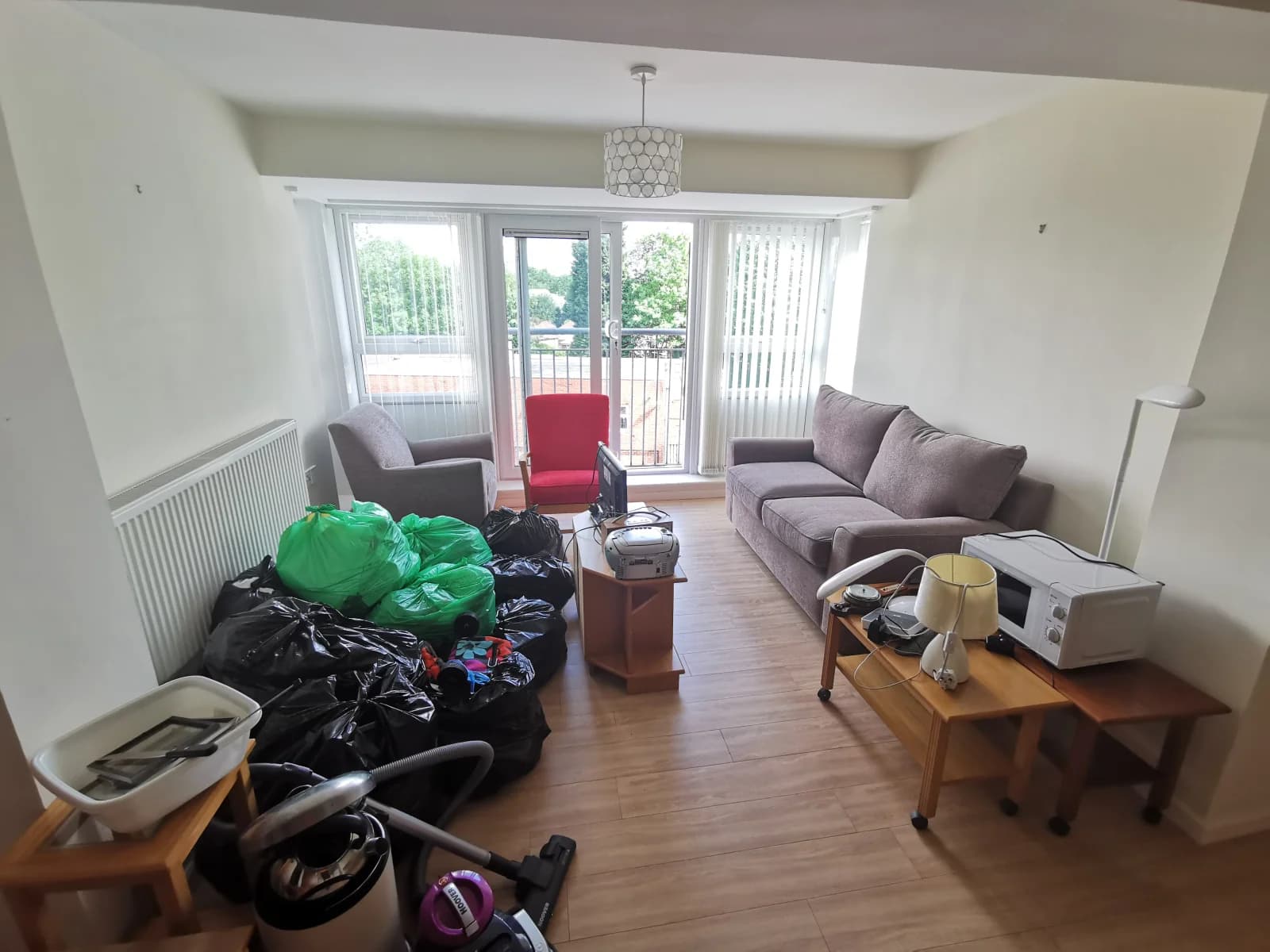
| General household waste | Everyday rubbish from a clear-out. | Goes to a registered carrier and a permitted site; keep a receipt. |
| Furniture | Often still usable. | Reuse or recycling comes before disposal where possible. |
| Sofas and padded seating | May contain POPs, a group of restricted chemicals. | Padded domestic seating must be kept separate and incinerated, not landfilled. Rules introduced in 2023. |
| Mattresses | Bulky and hard to landfill cleanly. | Usually sent to specialist mattress recycling. |
| Fridges and freezers | Contain gases that harm the environment. | Gases must be removed safely at an authorised site before recycling. |
| Other electricals (WEEE) | Hold data, batteries and useful materials. | Recycled through dedicated electrical routes; remove batteries and wipe data first. |
| Garden waste | Soil and green waste often get mixed. | Composting or recycling routes; mixed-in soil or turf can change how it is handled. |
| Wood | Treated or painted wood differs from clean timber. | Sorted by grade so treated wood is handled correctly. |
| Rubble and construction waste | Heavy and often mixed. | Specific recycling routes; flag any plasterboard or hazardous material. |
| Soil and hardcore | May be contaminated. | Can need testing before it goes to a suitable site. |
| Commercial waste | Needs a paper trail. | Waste transfer note required; keep it for two years. |
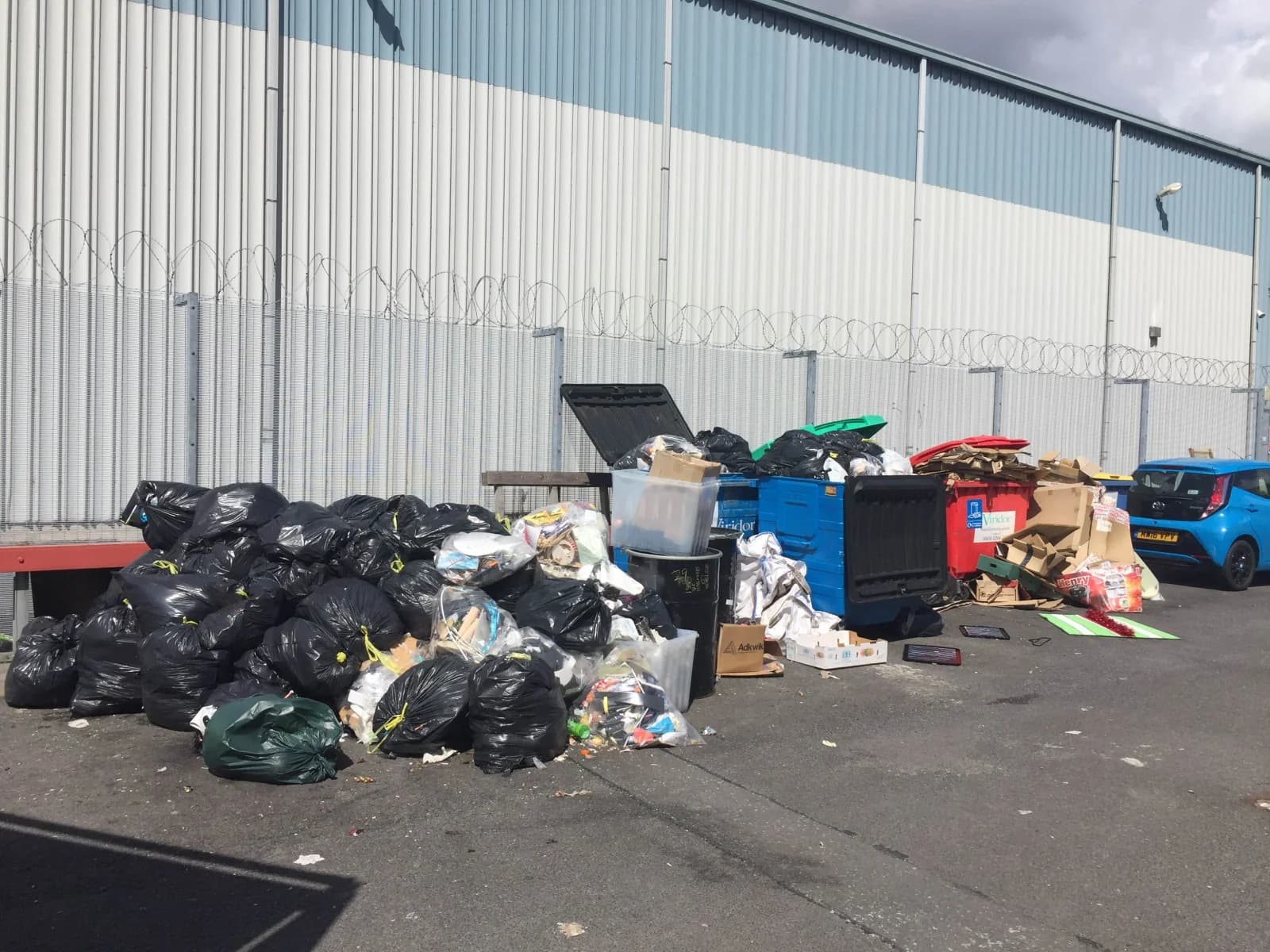
| Fly-tipped waste | Contents are unknown and sometimes dangerous. | Cleared carefully; sharps, chemicals or asbestos need specialists. |
| Hazardous or unknown items | A risk to health and the environment. | Use council hazardous services or a specialist contractor. |
We run dedicated collections for the bulky items people ask about most, including fridge removal, along with sofa and mattress collections handled the same way.
What should never go to an unverified collector?
Some items are hazardous and should never be added to a general load taken by someone you have not checked. These include:
- Chemicals, paints and solvents
- Asbestos
- Gas bottles
- Batteries
- Medical waste and sharps such as needles
- Oils, including engine oil
- Unknown or unlabelled containers
- Electrical items that need specialist processing
These usually need your council's hazardous waste service or a specialist contractor. If you cannot identify something, treat it as hazardous until you know otherwise, and if you suspect asbestos, leave it where it is and get advice. To be clear, we do not collect hazardous materials such as asbestos, chemicals, sharps or medical waste, but we are happy to point you towards the right service.
Hazardous items need a separate answer
Paint, chemicals, gas bottles, asbestos, batteries, sharps and unknown containers should not be slipped into a general load. Ask first, because they may need a council hazardous route or a specialist contractor.
How do illegal waste collectors usually operate?
Rogue operators tend to share a few habits. Take care if you notice:
- No business name, and no address beyond a mobile number
- No registration details and no paperwork offered
- Cash only, with nothing in writing
- A price far below everyone else
- Vague answers such as ‘we know a place’ rather than a named site
- A presence only on social media, with nothing you can trace
- Reluctance to say where your waste is going
Any one of these on its own might be innocent. Several together is a pattern, and the safest move is to walk away.
What paperwork should you expect?
Keep this simple. If you are a household customer, basic proof is enough: an invoice, a receipt, a booking confirmation, the messages you exchanged, or a photo of the vehicle. You do not need a formal transfer note, but a record protects you if questions come up later.
If you are a business, you will usually need a waste transfer note, or its annual version for regular collections, and you should keep it for at least two years. Whatever form it takes, good paperwork shows who took the waste and when. That is really all it needs to do.
Is the cheapest quote always the risky one?
No, but a price that is far below everyone else is a question rather than a bargain. Legal disposal has real costs behind it: labour, fuel, tipping and recycling fees, insurance and admin. A fair quote reflects those.
Say three firms quote around £150 to £200 to clear a van-load and a fourth offers £50 in cash. The £50 is not a better deal; it is a prompt to ask where the saving comes from. An honest operator will have a sensible answer, such as full loads or good recycling rates. Vagueness is the warning sign.
Cheap is not the issue. Vague is.
A low price can be legitimate, but it should still come with a licence, a clear disposal route and basic paperwork. If those disappear, the risk is not worth the saving.
It is also worth remembering that cheap and legal often overlap. Some of the most affordable routes are completely above board:
- Your council's bulky waste collection for items like sofas, mattresses and white goods, which is often inexpensive
- Household waste recycling centres, which are free for most household waste, though business waste is usually excluded
- Charity collection or reuse for furniture and appliances still in usable condition
- A registered carrier when you would rather not handle it yourself
So the aim is not to assume cheap means dodgy. It is to understand why a price is what it is.
What should you expect from a professional clearance company?
Whoever you use, a reputable company should be able to give you a clear price before you commit, collect household and business waste, take it to authorised sites and tell you which ones if you ask, handle different waste types correctly rather than tipping everything in together, and flag anything that needs specialist handling before the work starts.
That is the standard we aim for. If you would rather hand the whole job over, our house clearance service covers labour, loading, disposal and VAT in one quoted price, and we will confirm our carrier registration and answer questions about where your waste goes before you book.
If someone has dumped waste on your land, fly-tipping clearance deals with that too, although anything hazardous or any sharps may need a specialist rather than a standard collection.
We do not make blanket promises that everything is recycled, or guarantees that gloss over the detail. We would rather be straight about what happens to your waste.
Before you let anyone take your waste, check these five things
- Are they a registered waste carrier? Get the number and check it on the public register.
- Do they have a real business name and address, not just a mobile?
- Will they tell you where your waste is going?
- Will you get something in writing, such as a receipt, invoice or transfer note?
- Does the price make sense next to other quotes?
If you cannot tick all five, think twice before handing anything over.
Disposing of waste properly is mostly a short routine: use someone authorised, ask where it is going, and keep a record. Households have a duty of care and businesses have a heavier one with formal paperwork. Hazardous items always need a specialist route, and cheap is not the enemy, since council collections, recycling centres and charity reuse are all legitimate. Do these few things and you have taken care of almost all of the risk.
Official sources and further reading
We have based the rules in this article on current official guidance rather than our own opinion. If you want to check any of it for yourself, or read the detail behind a specific point, these are the pages it comes from:
Government and Environment Agency guidance
- GOV.UK: Waste duty of care code of practice
- GOV.UK: Dispose of business or commercial waste, including transfer notes
- GOV.UK: Dispose of hazardous waste
- GOV.UK: Fly-tipping and council responsibilities, including penalties
- GOV.UK: Household waste duty of care fixed penalty notice guidance
- GOV.UK: Manage waste upholstered domestic seating containing POPs
- Environment Agency: Register of waste carriers, brokers and dealers
Not sure which route your waste needs?
Send a few photos and tell us what you have got. We will confirm the right way to deal with it, what we can take, and a clear price, with no pressure to book. Call 0161 989 5446 or send the details over.