If your business produces waste, the law does not treat it as gone once the van pulls away. You keep a legal responsibility for it, and you have to be able to show where it went and who took it.
That responsibility is the business waste duty of care. Most businesses meet it without much difficulty. The ones that get caught out are usually smaller operations that assumed the rules were written for factories and construction sites, or that responsibility ended the moment someone else drove the waste away.
The duty of care in one sentence
Store your waste safely, only hand it to someone registered to take it, describe it accurately on a waste transfer note, and keep that note for two years.
What is the business waste duty of care?
The duty of care sits in section 34 of the Environmental Protection Act 1990. It applies to anyone who imports, produces, carries, keeps, treats, disposes of, or acts as a dealer or broker for controlled waste. That covers you as the business producing the waste, and everyone who handles it after you.
The duty is continuous, not a one-off form to complete. You must prevent the waste escaping your control, keep it contained and secure while it is on your premises, and take reasonable steps to satisfy yourself that whoever takes it next is authorised to have it.
The detail sits in the waste duty of care code of practice, which courts can take into account when deciding whether a business met its obligations.
Does it apply to your business?
Almost certainly. Any waste that comes from a commercial activity is business waste, and that includes activities run from home. A sole trader clearing a customer's garden produces business waste in the same way a distribution centre does.
| Situation | Why it counts |
|---|---|
| Office, shop or salon refuse | Waste arising from the running of the business, including packaging, paper and food waste from staff areas. |
| A trade working at a customer's property | Offcuts, packaging, old units and stripped-out material are normally the trade's waste, not the householder's. |
| A business run from home | Waste from the commercial activity is business waste even though it is produced at a residential address. |
| An office move or refit | Furniture, IT equipment, partitioning and fit-out debris leaving the premises in one clearance. |
| A landlord clearing between tenancies | The code of practice treats waste from clearing premises after the occupants have vacated as business waste, not household waste. |
The one that catches trades out is work done at a customer's property. If you fit a kitchen and take the old one away, that waste became yours the moment you loaded it, and the paperwork obligation follows you, not your customer.
Can business waste go in a household or council bin?
No. A household bin collection is provided for household waste. Putting business waste into a domestic bin, a communal residential bin store or a public litter bin does not discharge your duty of care, and it can leave you facing enforcement action from the council as well as the original problem of unmanaged waste.
Business waste needs a commercial arrangement. That can be a council trade waste contract, a private collection, or a registered carrier collecting on an ad-hoc basis. Whichever route you use, the same documentation requirements apply.
How you present the waste is regulated too. Since 31 March 2025, workplaces in England have had to separate dry recyclables, meaning plastic, metal, glass, paper and card, along with food waste, from residual waste. Businesses with fewer than 10 full-time equivalent employees have until 31 March 2027, and do not need to register for that extension.
The full workplace recycling rules for businesses in England explain which streams must be separated, how the employee threshold is calculated and what to do about food waste and contamination.
Watch the home-run business
Working from home does not turn business waste into household waste. If you run a trade, a salon or a small manufacturing operation from a residential address, the waste from that activity still needs a commercial disposal route.
If you need a regular or one-off collection rather than a contract, our commercial waste removal service explains what can be collected, how it is priced and what paperwork you receive.
What is a waste transfer note?
A waste transfer note is the written record of a transfer of non-hazardous waste from one holder to the next. You need one for each load of waste that leaves your premises. Both parties complete the sections that apply to them and both sign it. An invoice or delivery document can serve the same purpose if it carries the required information.
The description matters more than the form. The code of practice expects enough information for the next holder to handle and dispose of the waste safely and lawfully. A usable note normally records:
- A description of the waste and its List of Waste classification code, still widely called the EWC code
- The quantity, and whether it is loose or in a container
- The type of container the waste is in
- The date, time and place of the transfer
- The names and addresses of both parties
- The SIC code of the business transferring the waste
- Whether the transferor is the producer, importer, carrier, dealer or broker
- The waste carrier's registration number, or the exemption they rely on
- Signatures from both parties
| Record | Retention period |
|---|---|
| Waste transfer note, non-hazardous waste | 2 years |
| Season ticket covering repeat collections | 2 years after the final transfer it covers |
| Consignment note, hazardous waste | 3 years |
If you have regular collections of the same waste from the same place, you do not need a new note every week. A season ticket can cover repeat transfers of the same type of non-hazardous waste with the same carrier for up to a year, supported by a schedule recording the date, time, quantity and location of each collection.
Electronic copies are acceptable. What matters is that you can produce the records if the Environment Agency or your local authority asks for them, which they can do without warning.
This system is being replaced in stages. The digital waste tracking service opened in April 2026 and becomes mandatory for permitted waste receiving sites from October 2026, and for carriers, brokers and dealers from October 2027. Waste transfer notes must still be completed as normal in the meantime, so nothing about your obligations changes today.
Our guide to what a waste transfer note is covers every field it must contain, who signs what, and what the move to digital tracking will change.
How do you check a waste carrier is registered?
Anyone collecting your waste as a business should hold an upper-tier waste carrier registration. Most people call it a waste carrier licence; the register calls it a registration. In England the numbers start with CB, and an upper-tier registration normally reads CBDU followed by six digits. Asking for the number is the easy part. The step most businesses skip is checking it.
Search the company name or registration number on the Environment Agency's public register of waste carriers and brokers and confirm the registered name matches the business you are actually dealing with.
Check that the registration is current, that it is upper tier and not lower tier, and that the name on the register matches the name on the invoice and the vehicle. Note the date you checked and keep it with your transfer notes.
The Waste Removers is registered as an upper-tier waste carrier under CBDU609834, and we issue a Digital Waste Transfer Note after every completed collection. You are welcome to verify that number on the register before booking.
What happens if you get it wrong?
Failing to comply with the duty of care is a criminal offence, and there is no upper limit on the fine a court can impose. Most businesses, though, run into the problem from a different direction.
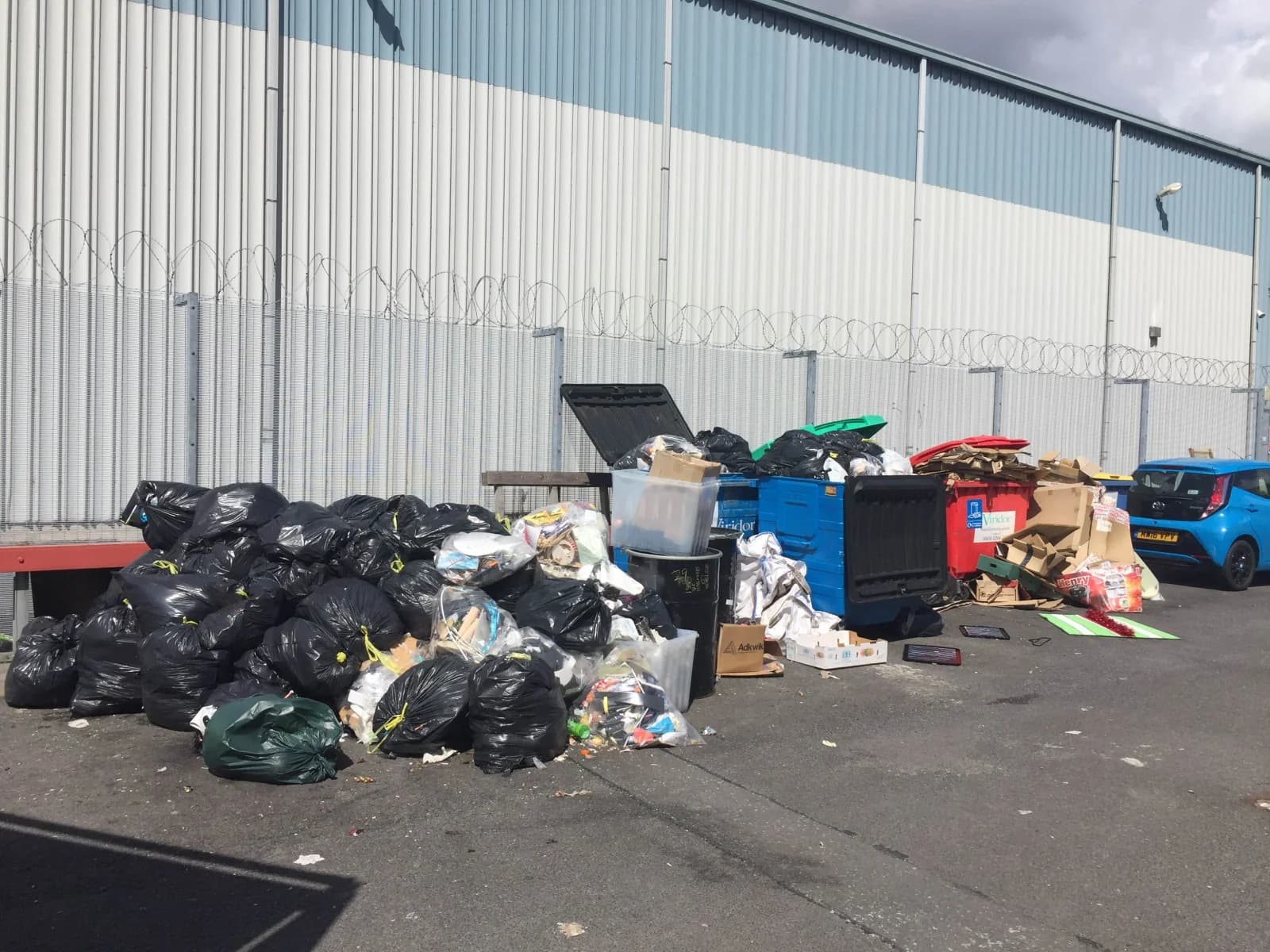
It usually starts with fly-tipping. If you hand waste to someone who is not authorised and they dump it, the waste is often traced back through paperwork inside it. You can then be investigated for failing your duty of care even though you did not dump anything yourself, and you may be asked to prove who you gave it to. Without a transfer note and a carrier check, that is a difficult position to argue from.
The cheap quote problem
A collection priced well below everyone else usually means the disposal cost has been avoided, not absorbed. If the waste is later fly-tipped, the saving disappears and the enquiry comes to you.
Our guide to legal waste disposal and avoiding fly-tipping fines covers the enforcement side in more detail, including how waste gets traced back to the business that produced it.
One-off clearances and office moves
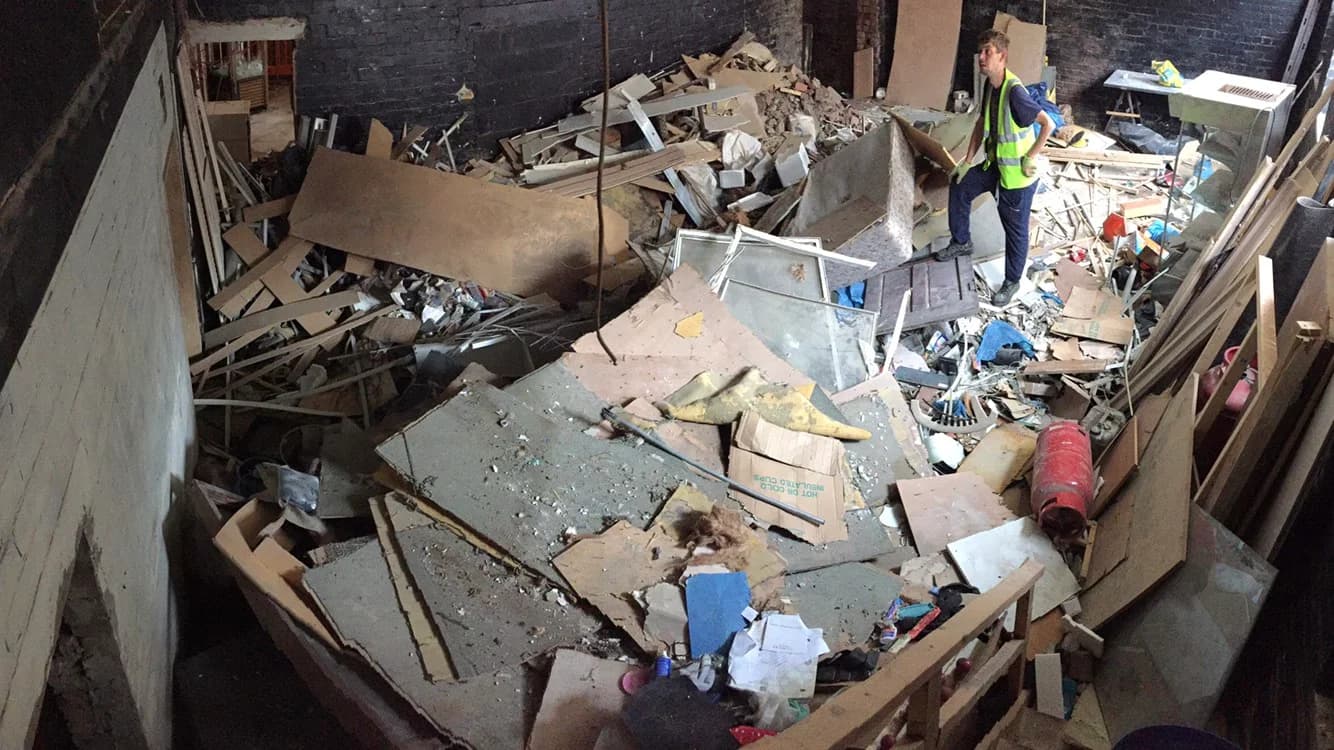
A weekly bin collection is straightforward. A clearance is where businesses tend to lose track of the paperwork, because several waste streams leave at once and the job is often handled by whoever is cheapest and available that week.
Office and commercial clearances usually contain material that cannot be mixed into general waste. Electrical equipment falls under the WEEE regulations and needs appropriate treatment. Confidential paper and data-bearing equipment need a documented destruction route, not a skip.
Upholstered seating is the one most people get wrong. The rules on waste upholstered domestic seating containing persistent organic pollutants cover office chairs that are fire resistant to domestic standards, so a good number of ordinary desk chairs are in scope. Commercial seating of a type not used in the home falls outside that guidance, but the Environment Agency still treats it as at particular risk of containing POPs and expects you to account for it under your duty of care. Either way, it should not go into a mixed load without being identified first.
Our guide to POPs waste and upholstered furniture disposal explains why padded seating is separated and what that means for the cost of a clearance.
Agree before the job which streams are included, who is producing the waste transfer note and what happens to anything found that needs a specialist route. One vague note covering a mixed load tells you very little about what actually left the building, and proves less if anyone asks.
Business clearance services
Duty of care checklist
Work through this before your next collection:
- Store waste so it cannot escape, blow away or be added to by others
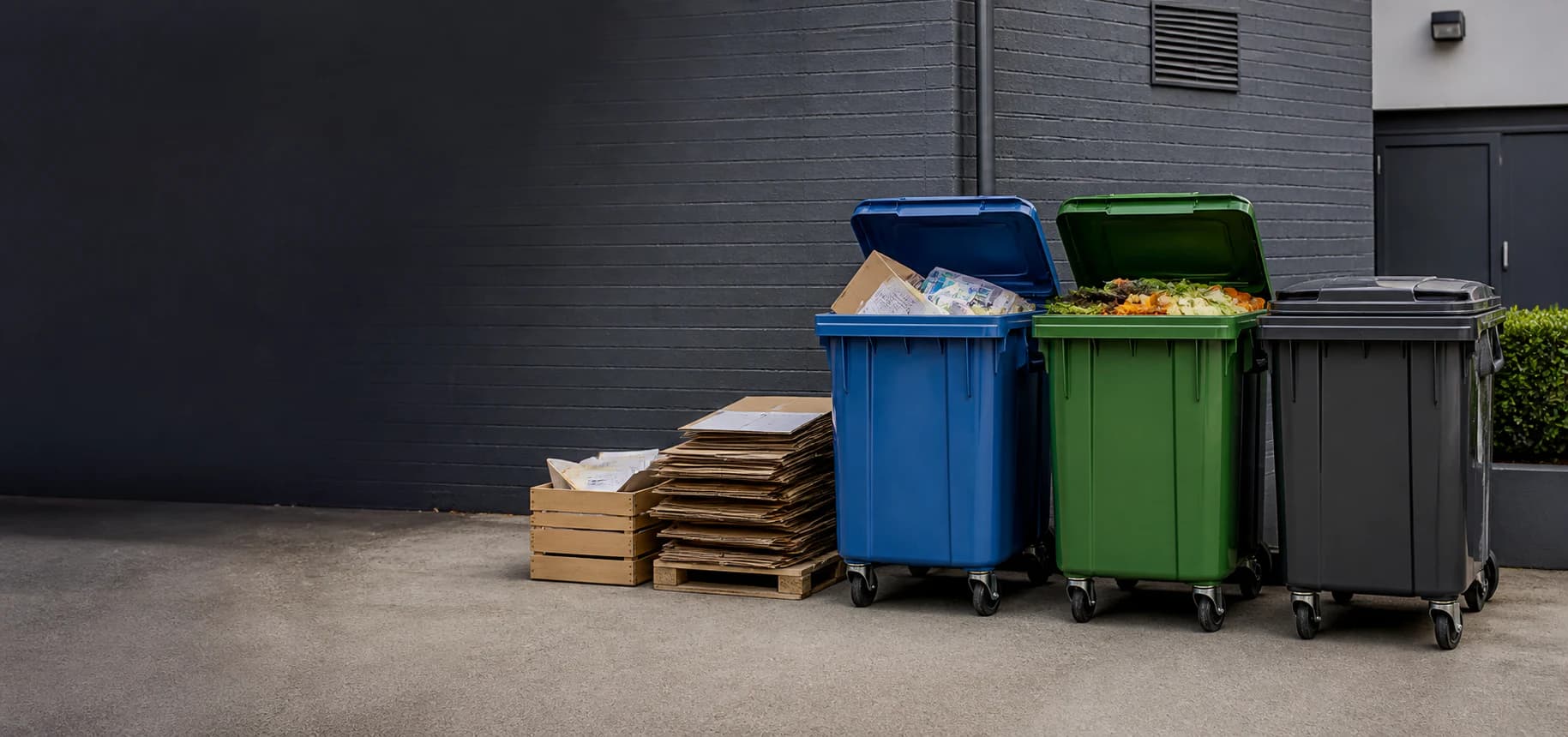
- Separate dry recyclables and food waste from residual waste, in line with workplace recycling rules
- Ask every carrier for their registration number and check it on the public register
- Confirm the registered name matches the invoice and the vehicle
- Complete a waste transfer note for each load, with an accurate description and classification code
- Use a season ticket for repeat collections of the same waste, from the same site, with the same carrier
- Keep transfer notes for two years, and hazardous consignment notes for three
- Store the records where someone other than you could find them at short notice
- Treat an unusually cheap quote as a reason to check the carrier more carefully, not less
Need a compliant business collection?
Tell us what the waste is, where it is stored and how often it needs collecting. We are an upper-tier registered carrier and issue a Digital Waste Transfer Note after every completed job, so your records are covered.