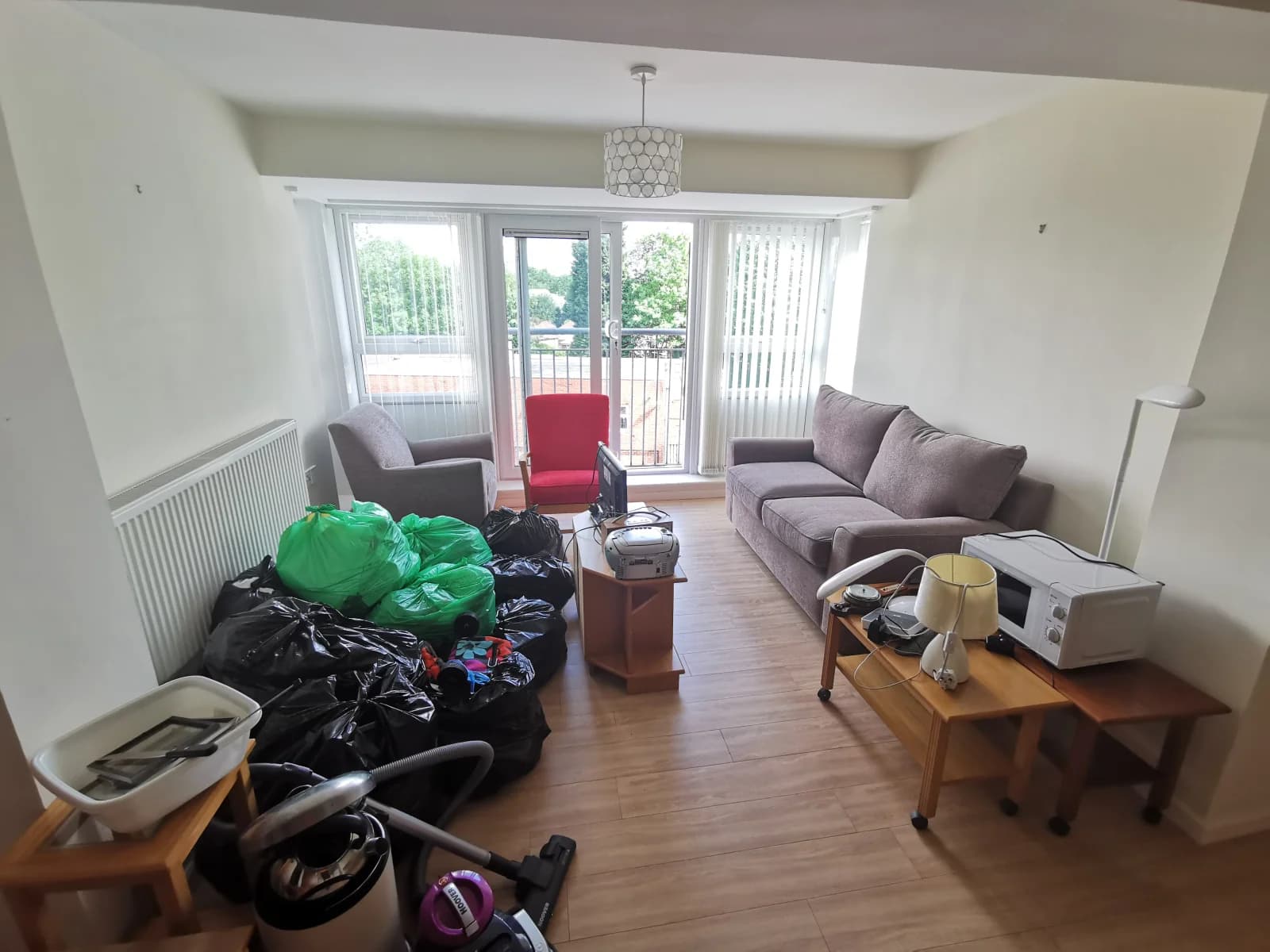
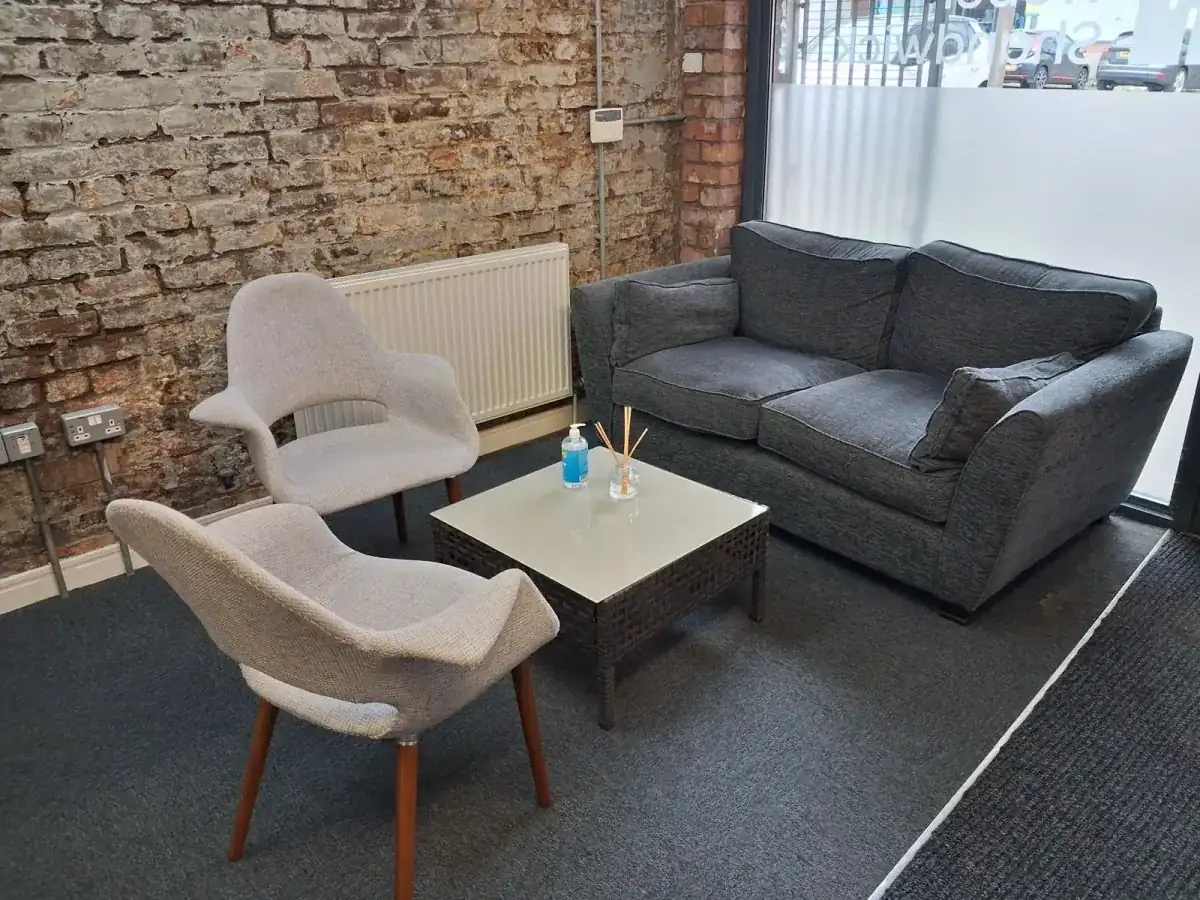
If you have tried to get rid of an old sofa or armchair recently, you may have found it can no longer go through the same landfill or recycling route as general bulky waste. Since the start of 2023, padded furniture has to be kept apart from other waste and disposed of in a specific way, because of a group of chemicals called POPs. Here is what that means in plain terms, and what it changes for you.
If the seating is part of a larger property clear-out, our guide to how the full house-clearance process works explains quoting, keep instructions, loading and the other waste streams involved.
Quick answer
Old sofas, armchairs and other padded domestic seating usually have to be treated as POPs waste once they are thrown away. That means they should be kept separate from general bulky waste and sent for compliant incineration, not landfilled, shredded or recycled with ordinary furniture.
Questions this article answers
What is POPs waste?
Why can't I put my old sofa in landfill or recycling?
Which furniture is covered by the POPs rules?
Does my mattress count as POPs waste?
Can I still take a sofa to the tip?
Why does sofa disposal sometimes cost more now?
How do I know if my sofa contains POPs?
Can I donate my old sofa instead?
Quick POPs check:
- Treat padded domestic seating as POPs waste unless you can prove otherwise
- Keep sofas, armchairs and padded chairs separate from general waste
- Do not break up padded seating to fit it into a bin or car
- Use your council, a household waste recycling centre or a registered carrier
- Expect padded seating to be sent for compliant incineration rather than normal recycling
A quick note before we start. This is general guidance to help you make good decisions, not legal advice, and it focuses on the rules as they apply in England. Scotland, Wales and Northern Ireland follow the same broad approach but can differ on some detail. If in doubt, check the official links near the end of this article or ask your local council.
What is POPs waste?
POPs stands for persistent organic pollutants. They are man-made chemicals that, as the name suggests, do not break down easily. They linger in the environment for years, build up in wildlife and the food chain, and can be harmful even at low levels. In furniture, the POPs that matter are brominated flame retardants, chemicals that were added to foam and fabric for decades to slow the spread of fire. The most common are known by initials such as decaBDE, HBCDD, PentaBDE and TetraBDE.
Because these chemicals were used so widely in upholstery, the safe assumption is that an old padded sofa or chair contains them. They are not a danger to sit on. The issue is what happens at the end of a piece of furniture's life: if POPs are landfilled or recycled in the usual way, the chemicals can escape back into the environment. So the rules now require them to be destroyed instead.
Which furniture is affected?
The rules cover what the government calls waste upholstered domestic seating, meaning household seating that has padding, foam or a soft cover. If you cannot prove a piece does not contain POPs, you have to assume that it does. In practice that covers:
- Sofas, sofa beds and corner suites
- Armchairs and recliner chairs
- Dining chairs with padded seats or backs
- Padded stools, footstools and pouffes
- Bean bags and floor cushions
- Padded office and desk chairs
- Padded garden furniture
A few things sit outside these rules. Mattresses are handled through their own recycling stream rather than the POPs rules. Solid wooden or metal chairs with no padding, deckchairs and similar non-upholstered items are not covered. Commercial and contract seating follows separate guidance. When you are clearing a home, though, the safest approach is to treat anything padded as POPs waste.
The full list of what is and is not included is set out in the government's guidance on managing waste upholstered domestic seating containing POPs.
What changed, and why your sofa can't go with general bulky waste
Until recently, an old sofa could go to landfill or be shredded for recycling along with other bulky waste. From the start of 2023 that is no longer allowed for upholstered seating. The Environment Agency now requires this furniture to be:
- Kept separate from other waste at every stage, from collection through to treatment, so the chemicals are not spread into other loads
- Stored and handled so the padding is not crushed or broken up in the open, which could release POPs
- Sent for incineration at a permitted facility, rather than landfilled or recycled, so the POPs are destroyed
What this means for you
For most households this changes the how, not the whether. You can still get rid of an old sofa easily; it just has to be dealt with the right way. In practice that means:
- It should not be fly-tipped or handed to an unverified collector, because dumped padded furniture is both an offence and an environmental risk.
- It can no longer be shredded or recycled the way it once could be.
- Your council's bulky waste collection will take it, though many now handle padded seating separately and some charge a little more for it.
- Household waste recycling centres usually still accept sofas, but staff will direct padded items to a separate container for incineration rather than general bulky waste.
- A registered waste carrier can collect it, keep it separate, and send it for compliant disposal.
- Don't break it up at home to fit the bin, as that can release the very chemicals the rules are meant to contain.
You may notice that getting rid of a sofa costs a little more than it used to, or that you are asked to keep it separate from the rest of a clear-out. That is the rules working as intended, not a company adding a surcharge for no reason.
Do not break it up
Cutting or smashing up padded seating can release foam and fabric fragments, which is exactly what the POPs rules are trying to avoid. Keep the item whole where possible and ask the collector how it will be handled.
How the rules treat common items
| Item | Covered by POPs rules? | How it is usually dealt with |
|---|---|---|
| Sofa, corner suite or sofa bed | Yes | Kept separate and sent for incineration at a permitted site. |
| Armchair or recliner | Yes | Same as a sofa: separated and incinerated, not landfilled or recycled. |
| Dining or office chair with padding | Yes | Treated as upholstered seating wherever it has foam or a soft cover. |
| Bean bag, footstool or floor cushion | Yes | Counts as padded seating and follows the same route. |
| Mattress | No | Handled through dedicated mattress recycling, a separate stream. |
| Solid wooden or metal chair, no padding | No | Reused or recycled as normal furniture. |
| Commercial or contract seating | Separate rules | Follows business and contract waste guidance rather than the household route. |
How a compliant sofa collection works
When a sofa is collected properly, a few things happen behind the scenes. The item is treated as POPs waste from the start, so it is not thrown in with general rubbish. It is carried and loaded so the foam is not torn open. On the paperwork it is recorded under the waste code 20 03 07 and described as waste domestic seating containing POPs, and it is taken to a site permitted to incinerate it.
This is why our sofa removal service keeps padded seating separate and sends it for compliant disposal rather than mixing it into a general load, whether it is a single sofa or part of a wider clearance.
Landlords, agents and businesses
If you produce this waste through a business, including landlords clearing a let or agents handling an end of tenancy, the duty of care rules apply on top of the POPs rules. You should pass padded seating only to a registered carrier, make sure the waste transfer note identifies it as upholstered seating containing POPs, and keep that record for at least two years. Putting it into a general mixed skip is not compliant.
Can you still reuse or donate a sofa?
Yes, and reuse is still the best outcome where it is possible. A sofa in good, clean condition with its fire-safety label intact can often be donated to a charity or reuse scheme, which keeps it out of the waste stream altogether. The POPs rules only apply once the item becomes waste. If it is no longer usable, donation is not an option and it must go down the disposal route described above.
The short version: old padded furniture now has to be kept separate and incinerated rather than landfilled or recycled, because of the flame-retardant chemicals it may contain. For you that mainly means using a proper route, whether that is your council, the tip or a registered carrier, and not handing it to anyone who cannot say where it will end up. Reuse a sofa if it is still good, and dispose of it correctly if it is not.
Official sources and further reading
The rules in this article are based on current government and Environment Agency guidance rather than our own interpretation. If you want to check the detail for yourself, these are the main sources:
Government and Environment Agency guidance
Need an old sofa or suite gone?
Tell us what you have got and where it is, and we will collect it the right, compliant way with a clear price up front. Call 0161 989 5446 or send a few details over.