Digital waste tracking is now mandatory for some facilities that receive waste in England and Wales. A business booking a collection needs to know whether it operates one of those facilities or is handing waste to a collector. The reporting duty depends on that role.
The position on 13 October 2026
The first phase began on 1 October 2026 for in-scope waste receiving sites in England and Wales. Scotland and Northern Ireland are scheduled to follow on 1 January 2027. The collector phase is currently planned for October 2027. Businesses must continue using the existing waste paperwork where required; the rollout has not abolished Waste Transfer Notes.
What is digital waste tracking?
Digital waste tracking is a government programme to record waste movements electronically. Its first service, Report receipt of waste, records loads arriving at in-scope receiving sites. The government describes the purpose in its 12 October 2026 statement on digital waste tracking: better waste data should help regulators identify suspicious movements and check that waste reaches authorised facilities.
The record concerns the waste movement: who delivered it, who received it, how the waste is classified and how it will be handled. It is not a promise that every item has been recycled, and a receipt at a facility is not necessarily the final treatment or disposal step.
When does digital waste tracking become mandatory?
| Date | Who it concerns | Position on 13 October 2026 |
|---|---|---|
| 1 October 2026 | In-scope permitted or licensed waste receiving sites in England and Wales | First phase already mandatory |
| 1 January 2027 | In-scope waste receiving sites in Scotland and Northern Ireland | Published start date; Northern Ireland's regulations are still progressing |
| October 2027 | Waste collectors; phase two covers carriers, brokers and dealers | Planned date, with detailed requirements still being developed |
The government's current delivery timetable plans public testing for collectors from spring 2027 and mandatory use from October 2027. The detailed requirements for that phase have not yet been finalised.
Northern Ireland's January date is the government's scheduled start date. As of 13 October 2026, the Assembly lists its proposed digital waste tracking regulations as still in progress.
Who has to report in the first phase?
Phase one applies to in-scope facilities permitted or licensed to receive controlled waste. The parliamentary statement gives examples such as transfer stations, paper mills, incinerators and composting facilities. It can also cover a permitted receiving operation on the same site where the waste was produced.
For England and Wales, the official receiving-site reporting guidance explains the scope, exceptions and deadline. In-scope receivers must submit records within two working days, beginning the day after receipt and excluding weekends and bank holidays.
The guidance excludes household waste received from residents at household waste recycling centres in England, and household waste recycling centres in Wales. Operators who qualify for digital exclusion must obtain a number from their regulator and follow the required written-record process. Sites operating solely under waste exemptions are outside phase one; their inclusion is planned for a later phase.
These details are for receiving operators. Exceptions and arrangements differ between UK nations, so a site operator should check its own regulator's guidance rather than applying the England and Wales rules to every UK facility.
What changes for businesses booking waste collections?
An office, shop or trade business arranging collection is usually acting as a waste producer. Booking a collection does not by itself make it the operator of a permitted receiving site. Check both roles if your business also runs a waste facility.
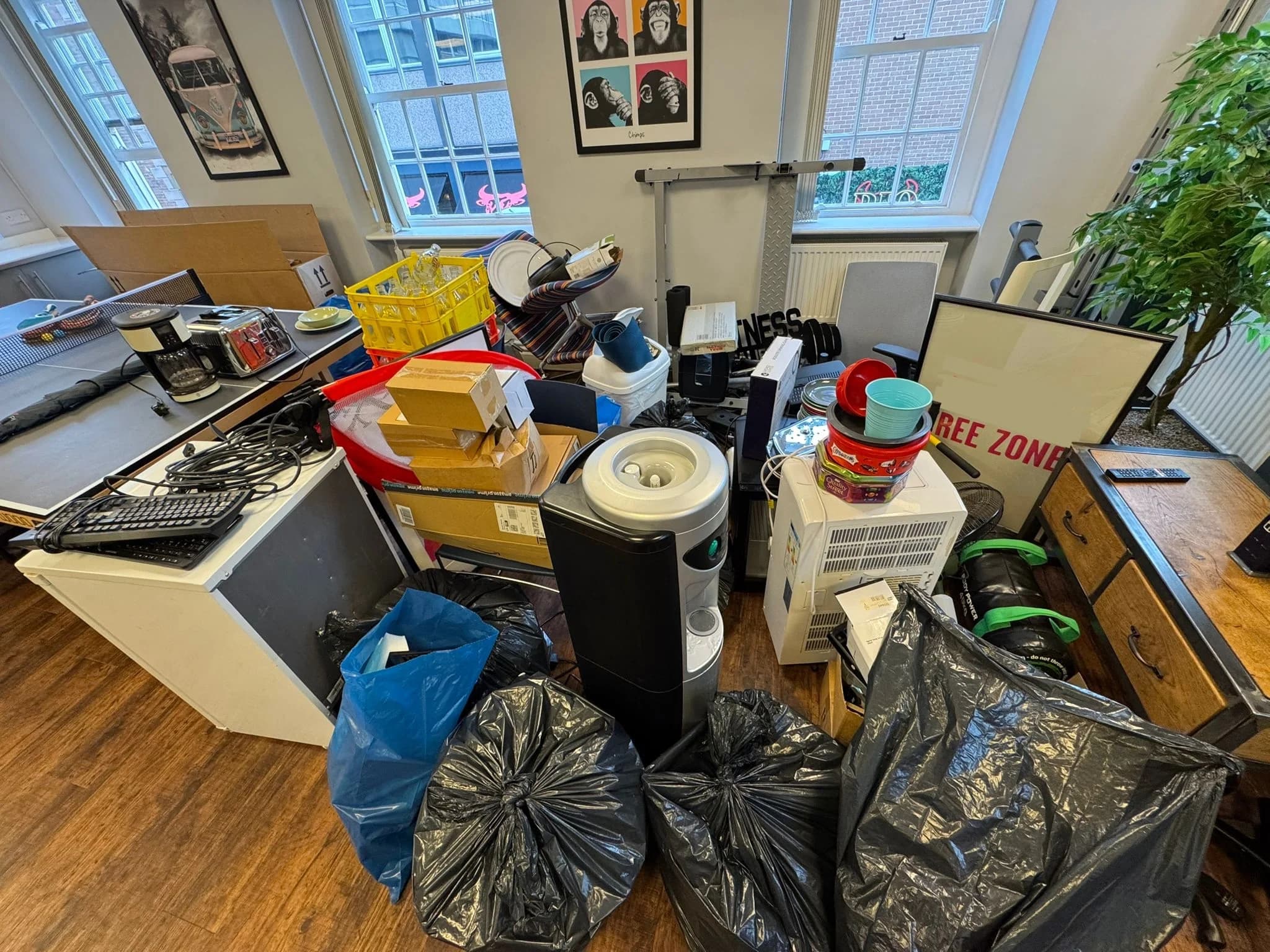
For example, an office disposing of unwanted desks produces the waste. A carrier collects it, and an authorised facility receives it. Under the first phase, the reporting duty rests with an in-scope receiving facility. The office still needs to describe the load correctly, use an authorised carrier and complete the applicable transfer paperwork.
Those customer responsibilities come from the existing business waste duty of care. Accurate records and carrier checks remain necessary while the tracking service expands.
A landlord or letting agent clearing premises after occupants have left may be handling business waste, even though the property was a home. A householder disposing of their own domestic waste has a different paperwork position. Those duties still apply when an in-scope facility reports the waste it receives.
The government's waste duty-of-care code explains these distinctions. In England and Wales, householders must take reasonable steps to pass their waste to an authorised person, but their own household waste does not carry the business Waste Transfer Note requirement.
Do Waste Transfer Notes still apply?
Yes. The official guidance on continuing waste records says Waste Transfer Notes, hazardous waste consignment notes and Annex VII forms must continue where required, alongside the receiving-site service. A waste business using the new system cannot assume that its existing document and return requirements have ended.
For a transfer of non-hazardous business waste, both parties must complete and sign a Waste Transfer Note or a document containing the same information. They must retain copies for at least two years. Our Waste Transfer Note guide covers the required fields, signatures, season tickets and retention periods in detail.
The primary requirements are set out in the GOV.UK Waste Transfer Note guidance. A normal invoice only serves as the transfer record if it contains the required information and signatures.
Is an electronic WTN the same as digital waste tracking?
| Record | What it does |
|---|---|
| Electronic Waste Transfer Note | Records a transfer between waste holders and supplies the required description, parties' details and signatures in electronic form. |
| Government digital waste tracking submission | Reports a waste receipt through the government service by the operator responsible under the current phase. |
The duty-of-care code permits electronic transfer records and viewable electronic signatures. An electronic note sent to a customer does not, on its own, show that a report has been submitted to the government's service.
The Waste Removers supplies an invoice and an electronic Waste Transfer Note for completed collections.
What can businesses do before their next collection?
Describe the actual load
List the waste types and approximate quantities. Send photographs of furniture, packaging, electrical equipment and any unusual items. A description of mixed office contents should explain what is present rather than relying on the words general waste.
Check the collector and destination
Verify the collector's authorisation and ask where the waste will be taken. Check that the receiving site's permit or exemption covers the relevant waste and activity. Investigate further if the proposed route does not match what you are handing over.
Agree the paperwork before handover
Confirm who prepares the transfer record, check its description and make sure both parties sign. Keep the note or equivalent document where the person responsible for waste records can retrieve it, including after a change of staff or premises.
Separate materials and confidential records
Follow the collection arrangements for recycling, electrical equipment and padded seating. Keep confidential paper out of general waste and agree secure shredding if needed. Flag excluded materials early so a suitable specialist can be arranged.
Review the next phase as guidance develops
If your business also collects waste, follow the collector rollout directly. If you are a customer, ask your carrier what information it needs and check claims of new customer duties against the published guidance.
These steps follow the existing business waste responsibilities. Customers must continue meeting these duties while the collector phase is developed.
For the separation requirements that already affect workplaces in England, use our workplace recycling guide. It explains which materials to keep separate before collection.
For a move, refit or handback, the office clearance checklist puts the item list, access arrangements, secure records and collection paperwork into a practical sequence.
What is planned for waste collectors in 2027?
The published phase-two plan covers carriers, brokers and dealers, with public testing from spring 2027 and mandatory collector use planned from October 2027. The Scottish regulator, SEPA, confirms that phase-two regulations are under development. Collectors should check the guidance and legislation for the nations in which they operate as the rollout progresses.
Before changing your collection process, check who must submit information, which data is required and whether any existing paperwork has been replaced. Keep following the current duty-of-care and transfer-record rules until a change is confirmed.
Business waste collection checklist
Before the load leaves:
- Identify whether you are only producing waste or also operating a receiving facility or collection business
- Give the collector an accurate item list, quantities and photographs
- Check the collector's authorisation and the proposed receiving route
- Confirm separate arrangements for recycling, WEEE, padded seating and confidential paper
- Keep materials the collector does not accept out of the load
- Check and sign the applicable transfer paperwork
- Retain non-hazardous Waste Transfer Notes for at least two years
- Use current official guidance to check any claimed new reporting requirement
Related waste collection services
Arranging a business waste collection?
Send photographs, an item list, the postcode and access details for a quote for suitable one-off business waste. We provide an invoice and electronic Waste Transfer Note. Secure document shredding is available on request. We do not collect asbestos, chemicals, sharps, clinical waste, gas bottles, fuels, oils, liquid paint, large batteries or suspicious materials.