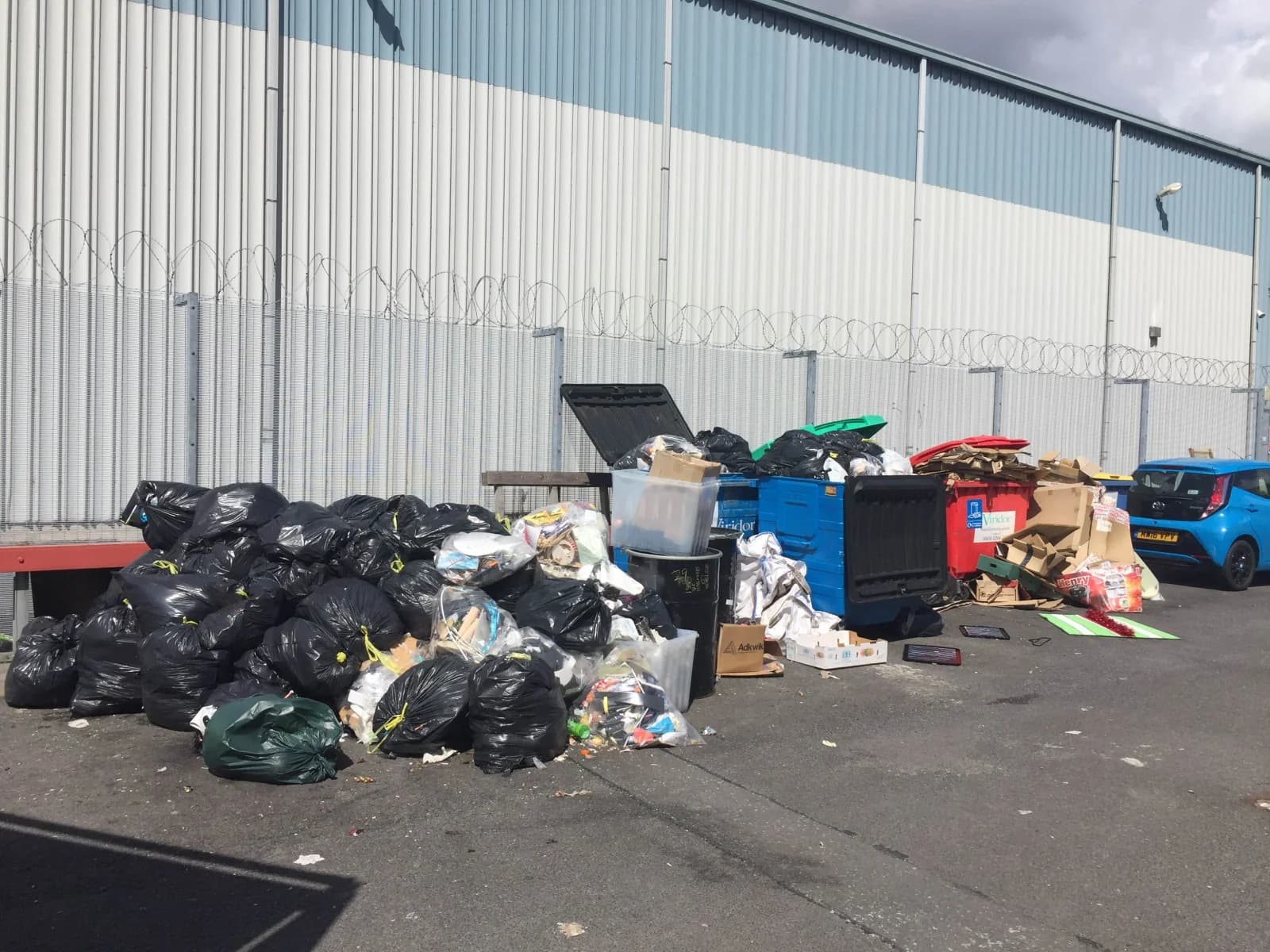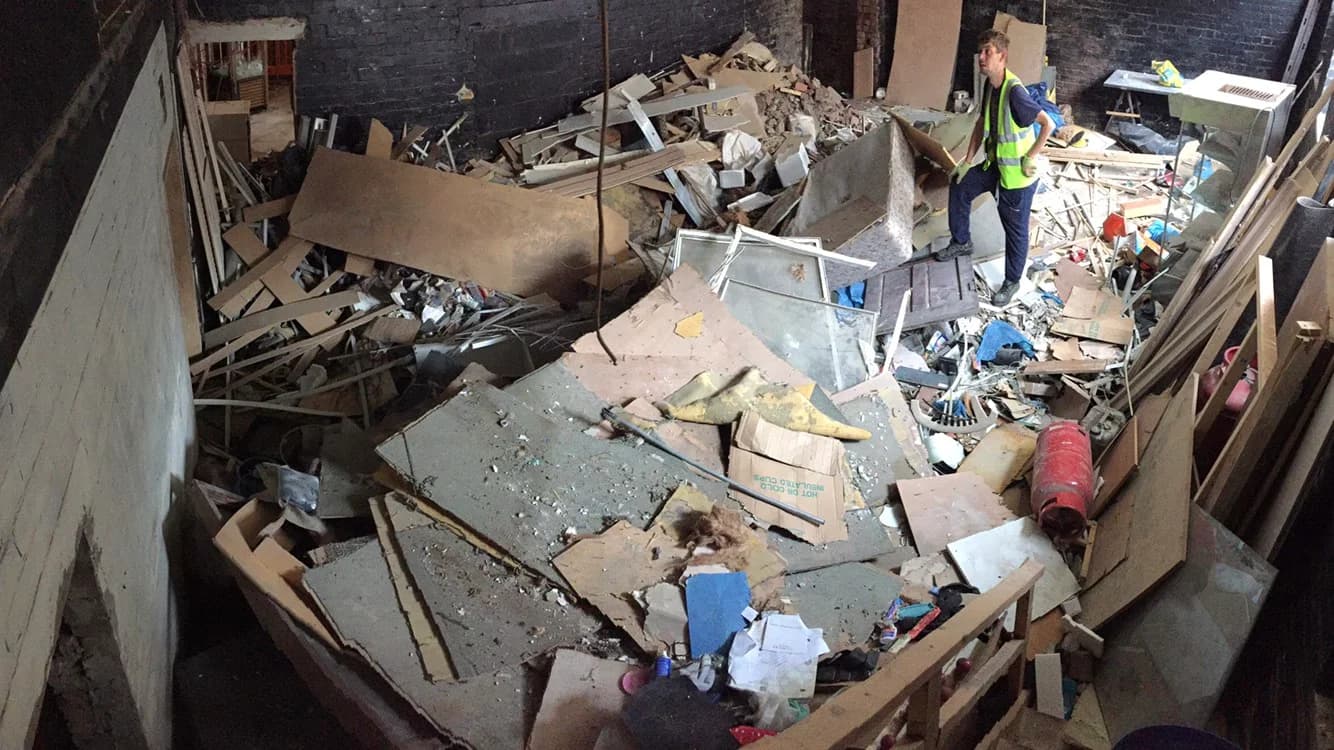
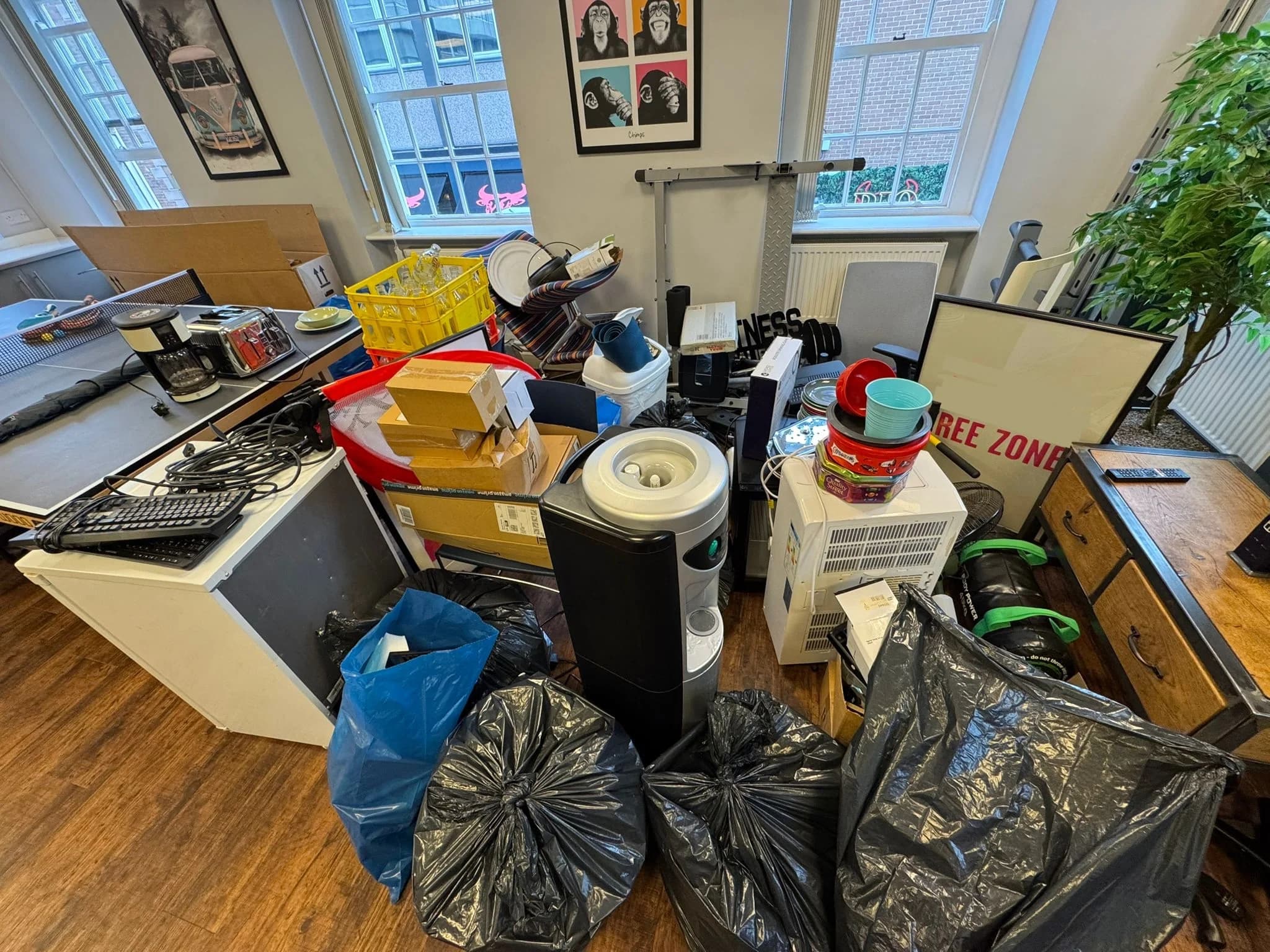
Before booking an office clearance, confirm when the premises must be ready and which items must stay. Photograph the furniture, electrical equipment and stored contents, then check how the team will get them out of the building.
Use the office clearance checklist below to plan a move, refit or lease handback. It covers the item list, building access, disposal routes and paperwork, with a suggested four-week schedule to work from.
The waste and recycling sections below describe the rules in England, where The Waste Removers operates. Businesses elsewhere in the UK should follow the guidance and regulator for their nation.
The short answer
Agree what must stay and what can be removed. List furniture, waste electrical and electronic equipment (WEEE), padded seating and confidential records separately. Confirm access, check the collector's registration and agree the waste paperwork before collection.
A four-week office clearance timeline
This is a suggested planning schedule, not a booking deadline. A small furniture collection may need less preparation. Start earlier if the job spans several floors, needs specialist contractors or includes repairs before the keys go back.
Four weeks before: define the job
Check the lease, handback brief or refit plan. Walk every room, cupboard and shared storage area, then record what must stay, move, return or leave the premises.
Three weeks before: choose the right routes
Separate furniture, reusable items, WEEE, confidential paper, data-bearing devices and anything unusual. Arrange specialist services early where ordinary clearance is not suitable.
Two weeks before: confirm the quote and access
Send photographs, item counts and building notes to the clearance company. Book loading areas or lifts and confirm sign-in, parking and time restrictions with the building manager.
One week before: confirm the final item list
Label retained items, issue the final clearance brief and confirm who can approve changes on the day. Ask what paperwork will follow the collection and where it should be sent.
1. Confirm what the office handback requires
A move, refit and lease handback are different jobs. A move may leave fixtures behind. A refit may involve contractors removing connected equipment or built-in units. A lease may require repairs, decoration or reinstatement as well as the removal of contents. Check the actual documents and ask the landlord, managing agent or property adviser where the wording is unclear.
Write down these details before requesting quotes:
- The final clearance date and the date keys must be returned
- Which rooms, cupboards, kitchens, stores and shared areas are included
- Anything owned by the landlord, an employee, a supplier or an equipment lessor
- Furniture, signs, cabling or fittings that must remain
- Any repair, decoration, cleaning or reinstatement work required separately
- Who has authority to approve extra items or changes on clearance day
Plan any other handback work
The Waste Removers does not provide repairs, decoration, reinstatement or deep cleaning. If the handback requires this work, book another contractor and agree the order of work before the clearance date.
2. Build an inventory and label every item
Photograph each room from more than one angle and count the main pieces rather than describing the job as a small or medium office. Include cupboards and cabinets that are still full. A clear inventory improves the quote and prevents useful, leased or confidential items entering the waste load by mistake.
Include the route to the loading point in your photographs: doorways, stairs, lift entrances and the place where the vehicle can stop. Room photos alone do not show the carrying distance or whether a desk will fit through the exit.
| Label | Use it for |
|---|---|
| Keep | Items staying in the current premises and not to be moved |
| Relocate | Furniture, equipment and files moving to the new workplace |
| Return | Leased equipment or items belonging to staff, suppliers or the landlord |
| Reuse | Suitable items being reassigned, sold or donated before they become waste |
| Clear | Agreed furniture, packaging and non-hazardous office contents for removal |
| Specialist route | WEEE, batteries, lamps, confidential records, data-bearing devices and restricted materials |
Sort before dismantling or piling items together. Keep furniture intact if you plan to sell or donate it, and confirm that the buyer or charity will accept it before arranging collection.
Flag padded office chairs and reception sofas separately. Some upholstered seating contains persistent organic pollutants (POPs), so its classification and disposal route need checking. Our guide to POPs and upholstered furniture disposal explains why affected seating must be kept apart from other waste and sent for compliant destruction.
For suitable loose furniture, storage, boxed contents and electrical equipment agreed in advance, see what our office clearance service includes and what details are needed for a quote.
3. Separate WEEE, data and confidential records
Do not mix office electricals into a general pile. List monitors, computers, printers, telephones, cables, kitchen appliances and other electrical equipment separately. Keep lamps, batteries and electrical equipment apart and tell the clearance contractor exactly what is present. WEEE must be classified before collection, recovery or disposal, and some equipment or components need specialist handling.
Data security is a separate decision from waste removal. Identify laptops, computers, servers, drives, mobile devices, printers with storage and removable media before anyone moves them. Use your chosen secure process for wiping or destroying the data and retain whatever evidence your organisation requires.
Paper containing personal or confidential information should also follow an agreed secure destruction route. The ICO explains practical methods for securely destroying records that are no longer needed.
Secure document shredding on request
The Waste Removers can provide secure document shredding on request. Tell us about confidential paper records before booking so we can agree the arrangements. We do not provide data wiping, media destruction or electrical disconnection; arrange these with another provider if needed.
4. Record lifts, stairs, parking and building rules
The route from each room to the vehicle affects labour and timing as much as the number of desks. Walk it before booking and include the details in the quote request.
- Floor number and whether a suitable lift can be reserved
- Stairs, narrow turns, fire doors and shared entrances
- Service corridors, shutters, loading bays and yard access
- Vehicle height, weight or time restrictions
- Parking permissions, permits and maximum loading periods
- Reception sign-in, security passes, keys and access codes
- Areas that must remain open to staff, residents or other tenants
- Furniture that may need safe light dismantling before removal
Tell the building manager what is planned and ask who controls the loading area and lift. Where other tenants use the same route, agree the working window and keep escape routes clear. Fixed units, connected equipment and anything unusually heavy should be identified before the quote is confirmed.
For a mixed one-off load from a shop, stockroom or other workplace rather than a furniture-led office job, commercial waste removal may be the better service.
5. Keep office waste streams separate
For recyclable packaging and staff-kitchen waste, follow England's workplace recycling rules. Where the rules apply, keep dry recyclable materials, food waste and residual waste separate before collection. Eligible businesses that had fewer than 10 full-time equivalent employees on 31 March 2025 have until 31 March 2027. A business started after that date cannot claim the exemption.
Keep clean cardboard and accepted packaging away from food and residual waste. Do not put batteries, bulbs, fluorescent tubes or electrical equipment into the ordinary dry-recycling stream. Ask the collector how each stream should be presented rather than buying a fixed number of bins without checking the collection arrangement.
Separation forms part of the wider business waste duty of care. The business must store waste safely, describe it accurately and take reasonable steps to ensure that everyone receiving it is authorised.
6. Check the carrier and agree the paperwork
Check the collection business on the Environment Agency's public register. Confirm it is a current upper-tier registration and that the registered name matches the collector. Ask where the load will go, then check that the receiving site's permit or exemption covers the waste type and activity involved.
When your business passes non-hazardous waste to another holder, the load needs a Waste Transfer Note or a document carrying the same information. Our guide to waste transfer notes explains the description, classification, signatures and other details that must be recorded.
Agree who will prepare the record before collection, check the waste description and make sure both parties sign it at the handover. Each must keep a paper or electronic copy for at least two years. Hazardous waste uses consignment notes and different record-keeping rules.
The government's reporting service is being introduced in phases while existing transfer paperwork continues. Our digital waste tracking guide explains who reports, which dates apply and how an electronic Waste Transfer Note differs from a government submission.
Keep the job file together
Store the approved quote, final inventory, carrier check, invoice, Waste Transfer Note and completion photographs together. This gives the business, landlord or facilities team a clear record of what left the premises.
7. Follow a room-by-room clearance-day sequence
Brief the site contact
Confirm the agreed rooms, loading route, building rules and the person authorised to answer questions before removal starts.
Check the labels
Walk the workspace once more and make sure retained, relocated, returned and specialist-route items cannot be confused with the clearance load.
Check what goes on the vehicle
Follow the agreed arrangements for WEEE and padded seating. Keep confidential records and devices awaiting data destruction out of the general load, and ask before adding any unlisted item.
Clear in an agreed order
Work through rooms, stores and cupboards systematically. Check each completed area before the team moves on or the site contact leaves.
Check what was removed
Record any items left behind or added by agreement, take completion photographs if required and confirm where the invoice and waste paperwork will be sent.
Office clearance: services and exclusions
| Items or work | Availability |
|---|---|
| Desks, chairs, tables, cabinets, shelving, reception furniture and loose non-hazardous office contents | Office clearance, with the item list agreed before booking |
| Safe light dismantling of suitable freestanding furniture | Can be included where safe and agreed |
| Monitors, printers, cables and small WEEE | By arrangement; list each item before booking |
| Secure document shredding | Available on request; agree the arrangements before booking |
| Repairs, decoration, reinstatement and deep cleaning | Not provided |
| Data wiping, media destruction and electrical disconnection | Not provided |
| Fixed services, built-in units and full strip-outs | Not included in office clearance |
| Asbestos, chemicals, sharps, clinical waste, gas bottles, fuels, oils, liquid paint, large batteries and suspicious materials | Not collected |
Use another provider for work listed as not provided, and a suitable specialist for materials we do not collect. Connected equipment must be safely disconnected before removal, and devices holding data need your agreed secure process. Keep excluded materials out of the clearance load.
Final office clearance checklist
Use this for the final review:
- Handback condition, deadline and decision-maker confirmed
- Every room, cupboard, kitchen and store photographed
- Items labelled keep, relocate, return, reuse, clear or specialist
- Padded seating identified and its disposal route agreed
- WEEE, lamps and batteries listed separately
- Confidential paper and data-bearing devices assigned a secure route
- Furniture counts and access photographs sent for the quote
- Lift, loading, parking, sign-in and working-hour rules booked
- Recycling, food waste and residual waste kept separate
- Waste carrier registration checked
- Waste paperwork and completion-photo requirements agreed
- Final room walk completed before keys are returned
- Invoice, Waste Transfer Note and job records stored together
Official guidance used in this checklist
- GOV.UK: dispose of business or commercial waste
- GOV.UK: Waste Transfer Notes
- GOV.UK: waste duty-of-care code and authorised destinations
- GOV.UK: classify waste electrical and electronic equipment
- GOV.UK: Simpler Recycling workplace guidance
- Regulation 4: micro-firm eligibility and the March 2027 exemption
- Environment Agency: upholstered seating containing POPs
Planning an office move, refit or handback?
Send photographs, an item list, the postcode and any building access restrictions. We can quote for the agreed office contents, explain which items need separate arrangements and provide an invoice and electronic Waste Transfer Note for the collection.