Garden cuttings can often be composted, collected through a council garden-waste service or taken to a recycling centre. Old fencing, furniture, soil and rubble need their own acceptance checks. For a large or mixed pile, compare a suitable skip with a collection team that carries and loads the agreed waste.
Start with the contents of the pile, then choose the disposal route. A few bags of hedge clippings and a pile hiding broken slabs are different jobs. This guide covers household garden clear-outs in England, using local guidance from Cheshire East and Greater Manchester within our service area.
Separate green waste from other garden materials
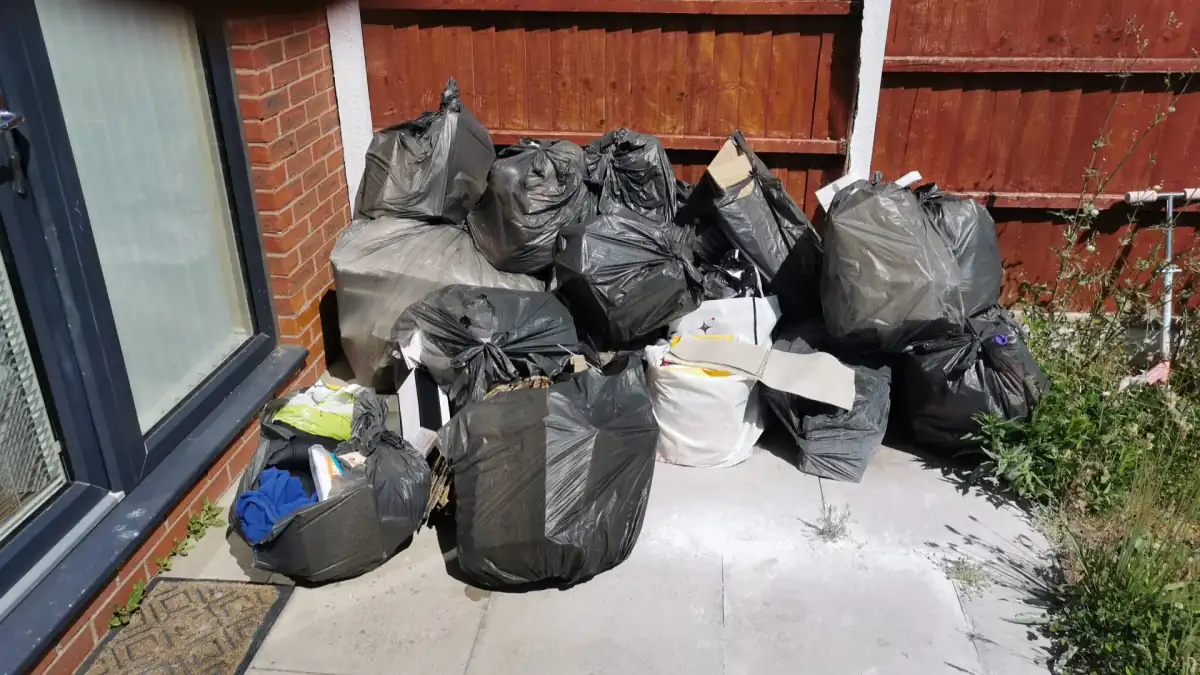
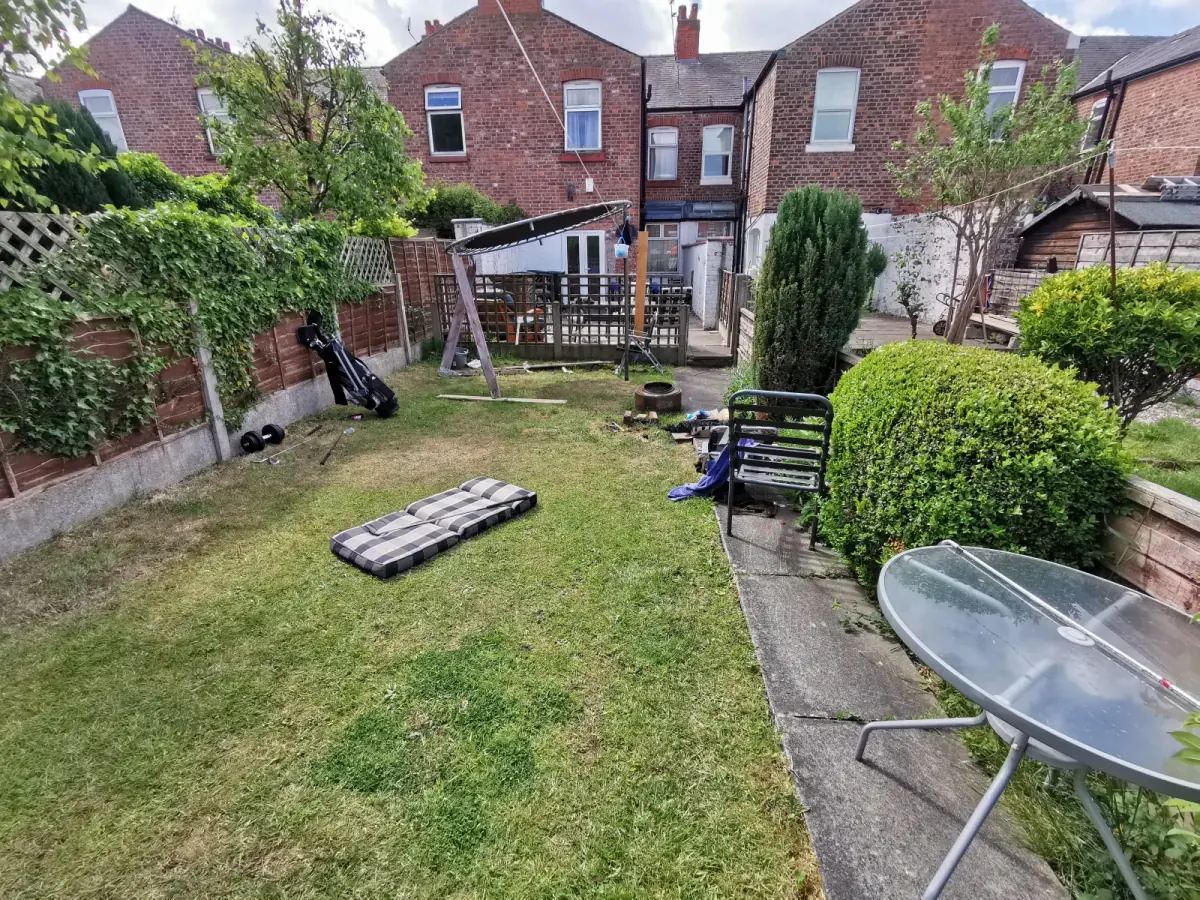
Before booking anything, look at the whole area you want cleared. Include waste behind the shed, bags beside the gate and anything you plan to add after a final tidy-up. Photograph the piles before moving them, especially if you are unsure what is underneath.
- Plant material: grass cuttings, leaves, hedge clippings, weeds and already-cut branches.
- Timber and bulky items: loose fence panels, trellis, planters, pots, furniture and outdoor toys.
- Heavy materials: soil, turf, bricks, rubble, concrete and paving slabs.
- Items needing advice before handling: unknown containers, chemicals, gas bottles, suspect roofing and plants that may need specialist disposal.
Keep those groups separate where you can do so safely. Leave uncertain or unstable material alone and show it in the photographs. If an old fence panel has concrete attached, or a planter is still full of soil, describe the complete item rather than listing only the timber or pot.
Compost or pass on suitable material
Home composting may suit some of the plant material you produce regularly. Recycle for Greater Manchester's composting guidance covers making compost from garden material and using fallen leaves for leaf mould.
Offer usable garden furniture, sound pots and spare slabs with clear photographs and an honest description. Agree what the recipient will collect and how they will reach it. Check that larger items will fit through the gate and agree a collection time before you set them aside.
Keep diseased plants, unidentified material and suspected invasive plants out of anything you offer to other people. Get disposal advice before moving them. If you are keeping some items and removing others, mark them clearly before a collector arrives.
Use your council garden-waste collection
A council garden-waste service can suit regular quantities of accepted plant material. Check whether you need a subscription, which container to use, what may go inside it and the next collection date. Check the council's current calendar if you are planning a clearance around a deadline.
For example, Cheshire East's green or brown bin guidance lists grass cuttings, leaves, hedge clippings, twigs and small branches among accepted items. It requires a garden-waste subscription and excludes pots and containers, rubble and stone, soil, compost and large amounts of turf. These are Cheshire East's rules; check the council for the address you are clearing.
An item being outdoors does not make it suitable for a garden bin. Keep fencing, furniture and other bulky waste out unless your council expressly accepts it through that service. Ask about the appropriate route for anything missing from its accepted-material list.
Check the recycling centre before loading your car
A household waste recycling centre may be practical when you can transport your own waste. Check the specific site's accepted materials, household eligibility, quantity limits, opening hours and any booking or vehicle requirements. Confirm separate arrangements for heavy waste before making the trip.
The Cheshire East recycling-centre material list includes green garden waste and limits soil acceptance to small household gardening projects and rubble to small DIY projects. Its centres exclude commercial waste, household waste you have been paid to dispose of and waste that is not from where you live. Resident facilities should not be assumed to cover a paid contractor's load.
Plan how you will load and unload each item. A slab that needs two people to lift at home will still need handling at the other end. Keep different materials accessible for the site's separate containers, and ask the operator about anything you cannot identify or move safely.
Choose a skip or a collection team for a larger clear-out
A skip gives you somewhere to put waste as a project progresses, with loading arranged by you. A crew-loaded collection suits waste ready to go at an agreed visit. Ask either provider to confirm the full waste list, heavy materials, access and what the quotation includes.
Our skip hire versus rubbish removal guide compares loading, timing, space and quote scope. Use the comparison alongside your waste list rather than choosing only by the advertised size of a skip or van.
The Waste Removers' garden clearance service removes suitable green waste and outdoor clutter that is already cut, gathered or ready to clear. We can review branches, bags of cuttings, loose fence panels, pots and garden furniture. Gardening, hedge cutting, landscaping and tree work need to be arranged separately.
Describe soil, turf, rubble and slabs before asking for a price. We review small suitable amounts by arrangement; they are outside an ordinary green-waste collection. A large excavation or heavy mixed load needs the right provider and disposal route agreed from the start.
A standing shed also needs its own brief. Our shed removal service covers suitable sheds that can be emptied, dismantled and removed safely. Tell us about the roof, base, contents and any electrical connections before booking. Include loose garden piles separately so the quote covers both parts of the job.
Read our old shed removal checklist before arranging for a standing shed to be emptied, dismantled or collected.
Keep restricted or unknown materials apart
Check old sheds and storage areas for chemicals, pesticides, fuels, oils, liquid paint, gas bottles and unknown containers. These are outside our standard garden-clearance service. Leave containers closed, keep them separate from the waste pile and ask the council or an appropriate specialist about disposal. Do not disturb suspected asbestos or unsafe structures.
Japanese knotweed and other invasive plants needing specialist treatment are also outside our normal collection. Moving affected soil or cuttings can spread them. Follow the government guidance on invasive plant disposal before moving suspect material off site.
Describe upholstered garden seats and cushions when asking about a collection so their handling can be checked. Our upholstered furniture disposal guide explains why some seating needs particular disposal arrangements.
For questions about burning waste, GOV.UK's bonfire guidance says household waste must not be burned in a way that pollutes or harms health, and smoke must not endanger traffic. Ask the council about suitable disposal routes instead.
Prepare the pile and the route out
Show the collector where the waste is now, rather than assuming you need to carry everything to the road. Ask where they want it left. If you are bagging cuttings, agree the bags and loading arrangement; leave heavy or sharp material separate and do not hide it under lighter waste.
Photograph the route from the garden to the likely parking position. Include side gates, steps, narrow passages, shared entries and soft or wet ground. Mention any locked access and who will be there to open it. Put tools, pots and furniture you are keeping away from the agreed waste, or label them clearly.
Send a complete brief for the quote
Check a private collector's registration before the waste leaves. GOV.UK's household-waste guidance directs householders using a private waste business to check the upper-tier waste-carrier register.
Read how to check who takes your waste before agreeing a collection. Registration is one check; the provider also needs to confirm it can accept your particular materials.
What to send before booking
- The postcode, preferred date and whether the waste is ready now or more will be added.
- Wide photographs of every pile, plus close-ups of bags, heavy materials and bulky items.
- A list separating cuttings, timber, furniture, soil, turf and rubble, including anything uncertain.
- Photographs of gates, steps, paths and the carrying route to the vehicle.
- Details of anything requiring dismantling, plus items and areas that must be left alone.
- Questions about loading, access, disposal, paperwork and any charges beyond the quoted scope.
Get a garden clearance quote
Send photographs of the waste and access route. We will check the materials and loading arrangements before confirming what we can collect and the price.