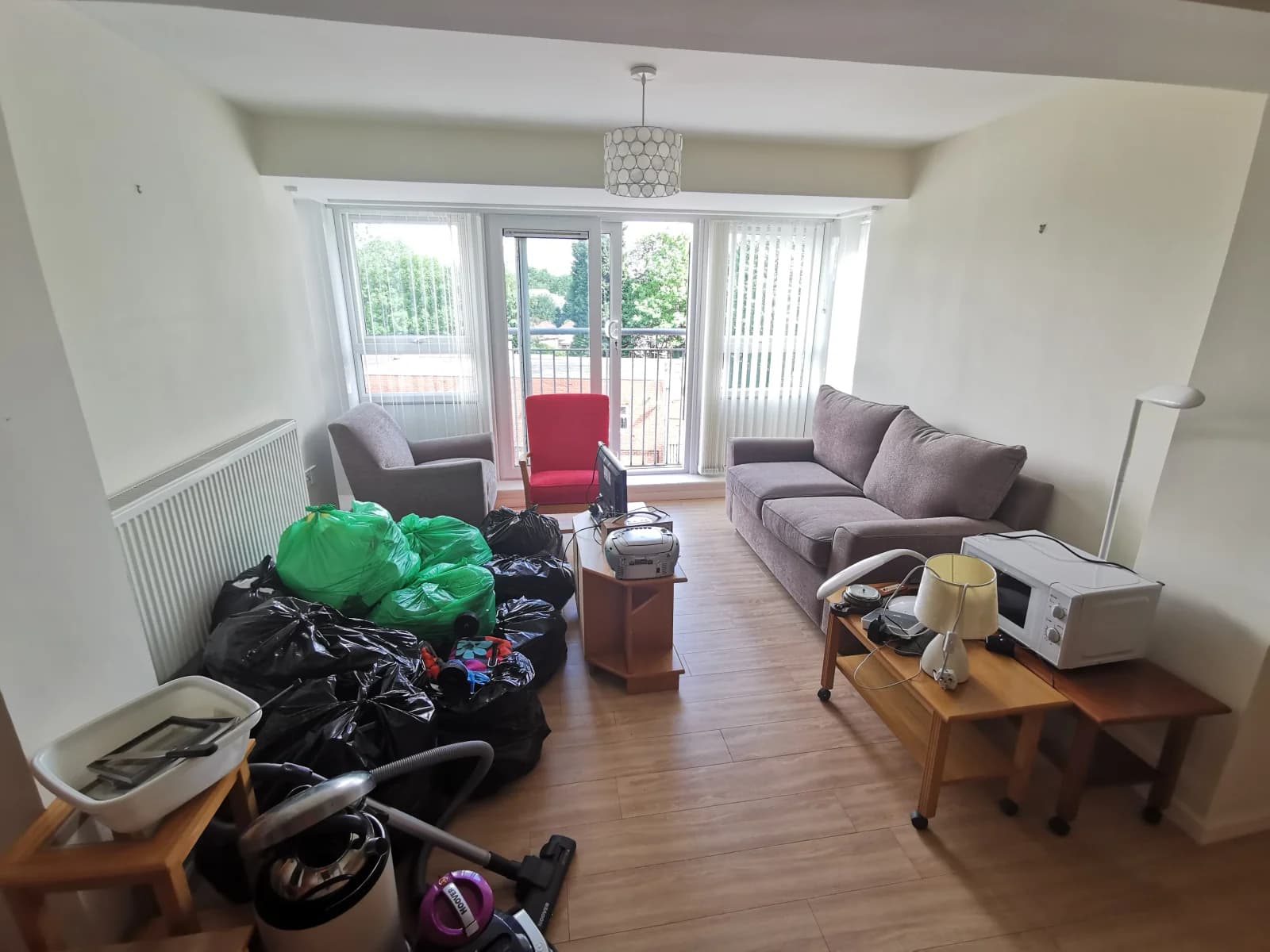
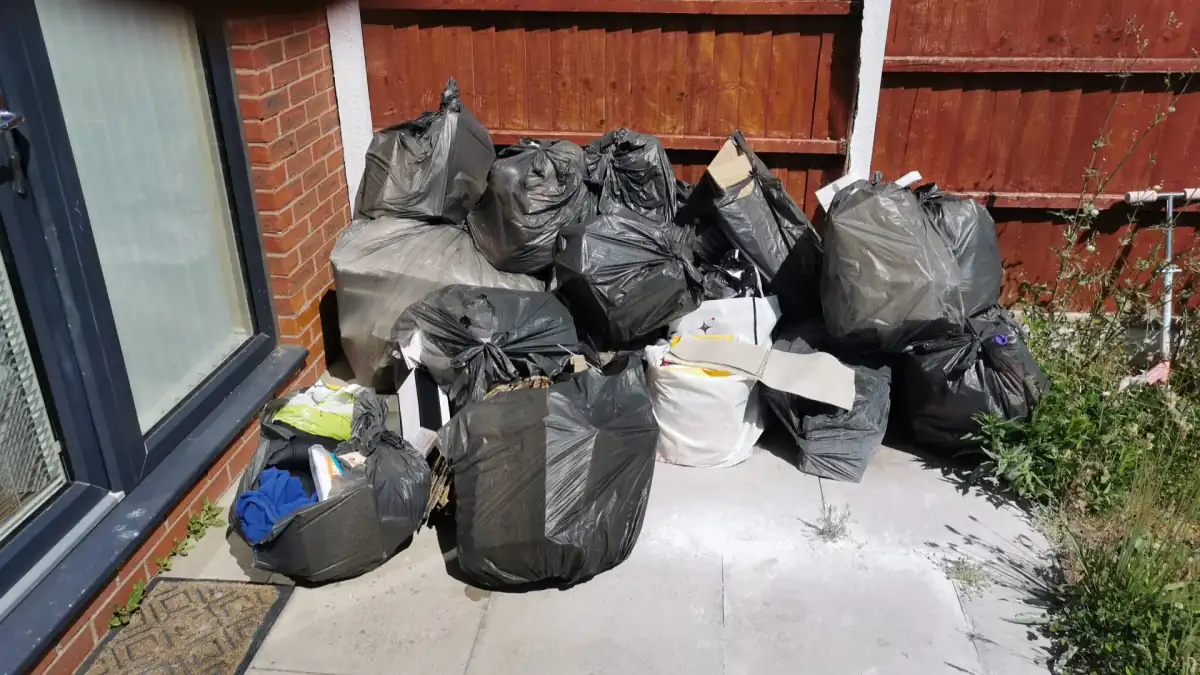
A skip gives you somewhere to collect waste over several days, but you do the loading. A rubbish-removal team carries and loads the agreed waste when it is ready to go. The better option depends on what you are clearing, access and the total price.
Man and van waste removal is another name for a crew-loaded collection. This guide covers clearances in England.
Skip hire and rubbish removal at a glance
| What to compare | Skip hire | Crew-loaded rubbish removal |
|---|---|---|
| Loading | You carry the waste to the skip and load it. | The collection crew carries and loads the items you have booked, where access is safe. |
| Space | The skip needs a suitable position and access for delivery and collection. | The collection vehicle needs lawful parking and a workable carrying route. |
| Timing | A skip can hold waste as a project progresses within the hire period. | A crew collection is usually arranged for waste ready to go at the booked visit. |
| Price | A skip quote should specify size, contents, weight allowance, hire period and permission costs. | A collection quote should specify load band, waste type, weight, labour, access and additional charges. |
| Capacity | The skip's available space and permitted weight both matter. | The collection vehicle's space and safe payload both matter; several loads may be needed. |
| Restrictions | Agree permitted materials and loading limits with the skip supplier. | Declare special or heavy items so the rubbish collector can confirm acceptance. |
When does each option make sense?
When a skip may suit the job
During a renovation or gradual clear-out, you can add waste to a skip as you work. Before arranging delivery, check that the vehicle can reach the position and that the ground can support it.
You still need to move everything to the skip and load it within the supplier's limits. Tell the supplier about rubble, soil or other dense materials before choosing a size. Ask about the hire period and collection arrangements too. Some operators offer wait-and-load services, so hiring a skip does not always mean leaving one outside for several days.
When a rubbish-removal team may suit the job
If you need furniture carried downstairs or bags brought out of a garage, include that work in your quote request. Show the collector the stairs, tight turns, gates and carrying distance.
The Waste Removers' rubbish removal service includes carrying and loading agreed items from inside or outside where access is safe. Send photos of the items and access route so we can plan the crew and confirm the price. For a large clearance, ask how many loads the quote covers.
Which option costs less for your job?
Send each provider the same item list, photographs and access details. A self-loaded skip and a collection that includes carrying furniture down two flights of stairs cover different jobs. Compare what each quote includes and the total you would pay.
Cubic yards measure volume, not weight. A load of soil can reach a vehicle or skip's weight limit before the space is full. Compare weight allowances as well as volume.
Ask each provider to confirm:
- The complete price, including VAT where applicable.
- The agreed items and any weight or volume allowance.
- Who carries, loads or dismantles items, and any labour limit.
- Any extra charge for stairs, a long carry or particular materials.
- For a skip: hire duration, extensions, delivery, collection and permission costs.
- For a collection: the planned loads and what happens if more space or time is needed.
- Any failed-visit charge if access is blocked or the waste differs from the booking.
Our waste removal prices and calculator show guide prices by load band, plus VAT. Send photos and tell us about any heavy or specialist items for a confirmed quote.
What space, access and permissions do you need?
A skip placed entirely on private land does not need a skip licence. A skip on a public road needs a permit, usually arranged by the operator, although the process varies. Check GOV.UK's skip-licence guidance and the relevant council before booking road space. Confirm the position, permission to use the land and delivery access with the supplier.
For example, Manchester City Council's skip-permit guidance says the skip operator must apply for the permit and only wait-and-load arrangements are approved in the city centre. Check the council responsible for your address before booking.
Do not assume a skip can go on a pavement or verge. Confirm the proposed location with the operator and local highway authority.
Parking arrangements can be separate from the skip permit. For example, Cheshire East requires a parking-bay suspension before a skip-licence application for a parking bay. Ask your own council about the proposed location.
A collection van also needs lawful parking and loading access. Tell the collector about controlled parking, loading bays, narrow streets or a long walk to the property.
Which waste should you check before booking?
List fridges, electricals, sofas, plasterboard and rubble or soil when you request a quote. Providers have different rules and charges; an ordinary mixed-waste booking may not cover them.
Sofas and armchairs can contain persistent organic pollutants (POPs), which affect how they must be disposed of. Our sofa and upholstered furniture disposal guide explains what that means when arranging collection.
For cooling appliances, compare the fridge and freezer disposal options. Tell The Waste Removers about these before booking. Asbestos, chemicals and gas bottles are outside our standard rubbish collection.
Which option suits your clearance?
| Your situation | Option to explore | What to confirm |
|---|---|---|
| A renovation producing waste over several days | A skip suited to the materials | Placement, permitted contents, weight limit, loading help and hire period. |
| Bags and furniture ready in a garage | A crew-loaded collection | The whole load, carrying route, agreed items and total quote. |
| Upstairs furniture with nobody able to carry it | Collection with carrying and loading included | Stairs, doorways, dismantling, safe access and labour allowance. |
| A quantity of rubble or soil | A quote for the rubble or soil | Tonnage and handling; a standard mixed-waste skip or van price may not suit. |
| A whole property with contents still to sort | A full house-clearance assessment | What stays, sorting instructions, labour, several loads and any special items. |
If the job includes cupboards, several rooms and belongings to keep aside, read how a house clearance works before comparing quotes. Agreeing which areas and tasks are included is more useful than estimating the job from the number of bedrooms alone.
For a few suitable items, check reuse, charity collection or your council's bulky collection too. Furniture in good condition may be useful to someone else, while council acceptance and collection arrangements vary. Those options can reduce the amount left for a paid clearance.
Check the provider before handing over waste
GOV.UK's household-waste guidance says to check upper-tier registration when a private business takes your waste, including skip collections. Ask where your waste will go and keep the quote, receipt or booking record.
For the checks in more detail, read our guide to legal waste disposal. A registered carrier still needs to confirm that it can take your particular waste.
If a tradesperson produces waste during construction or renovation, it is business waste even though the work takes place at a home. The tradesperson is responsible for arranging lawful disposal; agree the removal arrangements before work starts.
Considering a rubbish-removal team?
Send photos of everything to go, your postcode and the route to the vehicle. Include stairs, parking restrictions and any heavy or specialist items so we can confirm the work and price before you book.