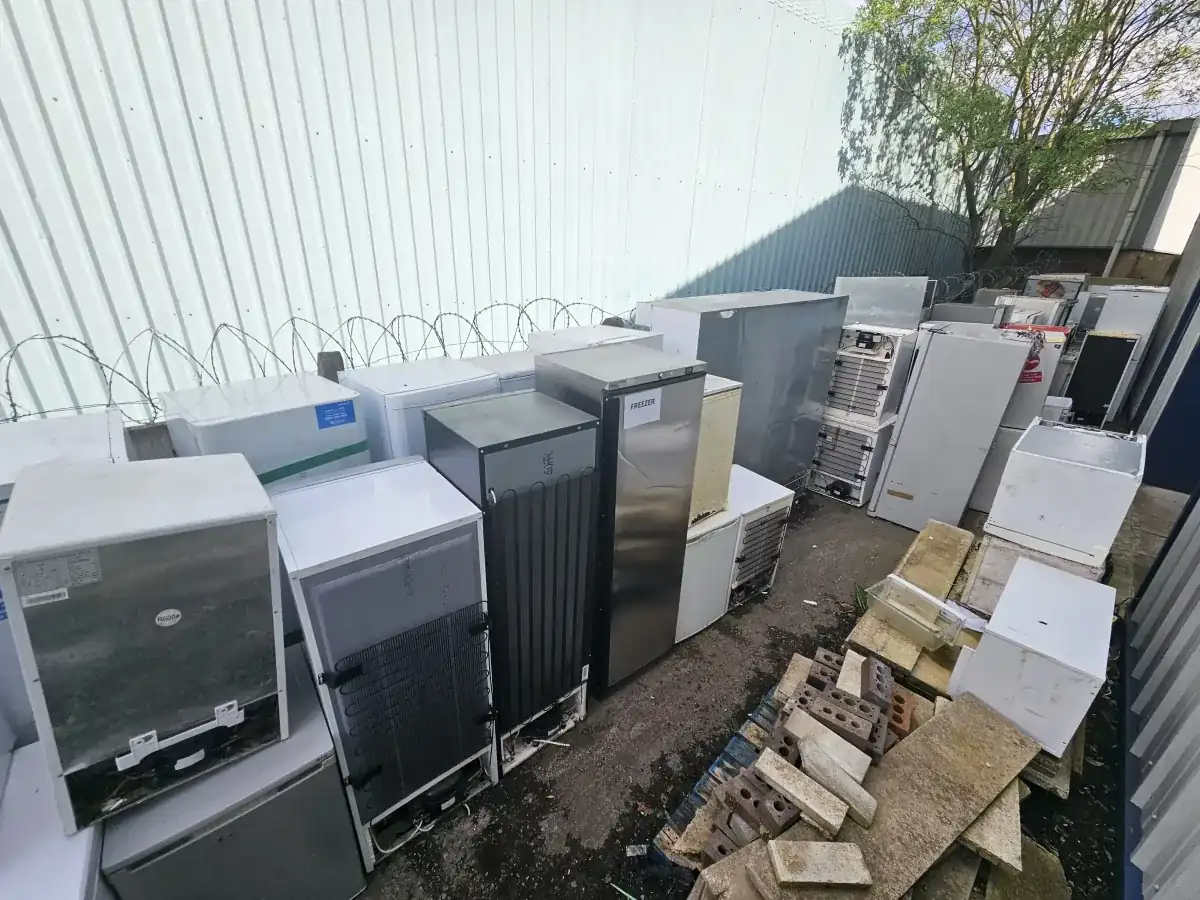
To dispose of an old fridge or freezer in England, choose retailer take-back, council bulky collection, a household waste recycling centre or a registered private collector. If it still works, you could sell or donate it.
Before you book or travel
Check that the service is taking fridges and freezers, what it charges and where it will collect from. Keep the appliance intact and follow the preparation instructions before collection.
Which fridge disposal option should you use?
| Option | When it may suit | Check first |
|---|---|---|
| Sell or donate | The appliance works and someone can use it | Condition, acceptance and who will move it |
| Retailer take-back | You are buying a replacement appliance | The retailer's scheme, home collection fee and disconnection rules |
| Council bulky collection | Your council currently collects cooling appliances | Price, eligible units and where you must leave it |
| Household recycling centre | You can transport and unload it safely | Current acceptance, booking, vehicle and resident rules |
| Registered private collection | You need collection from indoors or upstairs, where access allows | Carrier registration, disposal destination and the full quote |
These are among the disposal routes set out in GOV.UK's household waste guidance. Availability depends on the appliance and the service you choose.
Can you sell or donate a working fridge?
Ask the buyer or charity before arranging delivery. Give the model, dimensions, age if known and an honest description of its condition. Charities may need to test appliances or reject particular models, so check before taking it anywhere.
For local reuse and recycling options, Recycle for Greater Manchester's fridge and freezer guidance is a useful starting point. If your appliance has a fault, describe it accurately rather than offering it as working.
Will a retailer take your old fridge away?
When buying a replacement, ask about the seller's disposal arrangements before paying. Under the retailer rules for electrical waste, sellers must provide a route for equivalent old household electrical equipment. This may be their own take-back service or an eligible scheme.
Where a retailer provides in-store take-back, acceptance is free, including equivalent equipment of another brand. However, GOV.UK allows a charge for transport from your home. Free take-back does not necessarily mean free collection alongside your new delivery.
Some eligible retailers use the Distributor Take Back Scheme instead of providing their own service. Confirm where the old unit goes, whether collection must be booked with the delivery and whether you need it disconnected beforehand.
Can the council collect your fridge or freezer?
Check your council's bulky-waste service for fridges and freezers specifically. Look at the appliance sizes it accepts, collection charge and available dates. Ask where it must be left and whether any assistance is available if you cannot move it safely yourself.
For example, Manchester City Council's bulky collection service does not collect from inside the property and specifies where items must be left. Follow the instructions in your own council's booking confirmation.
Can you take a fridge to the tip?
A household waste recycling centre may accept your own domestic fridge or freezer, but check the individual site's rules before loading it. Confirm current acceptance, whether you need an appointment or proof of address, and whether your vehicle or trailer needs a permit. Also check that you can unload it safely.
If you live in one of the nine councils covered by Recycle for Greater Manchester, check its van and trailer permit rules. Vans, including hired vans, pick-ups and twin-axle trailers need a permit. The permit only covers waste from your own home.
Resident access is not permission for a business or paid clearance company to use the same household service. If the appliance comes from a shop, café or a landlord clearing vacated premises, explain that when asking about disposal.
What should you check before booking a private collection?
For a paid private collection, check the business's current upper-tier registration on the Environment Agency's waste-carrier register. Match the registered name to the collector. Ask where the appliance will be taken and whether that site is authorised to receive cooling equipment.
Send photographs of the unit and the route out, including stairs, narrow doors and the loading point. Ask whether carrying, loading, disposal and VAT are included in the quote. Keep the quote, receipt and collector's details so you have a record of the handover.
Our fridge and freezer removal service includes carry-out where access is safe. Appliances must be empty, and integrated units must be safely disconnected before arrival. Suitable light commercial units can be reviewed by arrangement. We do not repair appliances, disconnect integrated units or carry out specialist treatment on site.
For the wider checks when choosing a collector, see our guide to legal waste disposal and avoiding fly-tipping risks.
Why does a fridge need specialist recycling?
A discarded fridge or freezer is classed as waste electrical and electronic equipment, usually shortened to WEEE. Cooling equipment can contain refrigerants, oils and insulating-foam blowing agents. The substances vary between appliances, so do not assume every old fridge contains the same gas.
The Environment Agency's cooling-equipment treatment guidance requires controlled recovery of refrigerant and oil, followed by treatment that captures gases from insulation foam and separates materials. Removing the visible metal is only part of the process.
Keep the appliance whole. Do not cut cooling pipes, remove the compressor, puncture panels or break it up to fit a vehicle or skip. The Environment Agency's handling guidance explains why cooling circuits, casing and insulation must be protected from damage. If the unit is already leaking or damaged, describe that before anyone agrees to collect it.
How should you prepare it for collection?
Before the collection day:
- Remove all food and other contents; do not fill the appliance with extra rubbish
- Follow the manufacturer's instructions for switching off and defrosting, allowing time for thawing and drying
- Arrange safe disconnection of integrated units or water connections before the crew arrives
- Keep the unit intact and ask the collector how to secure doors and loose shelves
- Photograph stairs, narrow turns, doorways and the route to the vehicle
- Report damage, leaks, contamination or an unusually heavy unit before booking
- Follow the agreed collection-point instructions and keep access routes clear
For example, Sefton Council's collection terms require fridges and freezers to be empty and defrosted. Follow your collector's instructions and allow enough time for the freezer to thaw and dry.
If the fridge is part of a larger clear-out, our guide to how house clearance works covers the room photographs, item list and access details needed to quote for the whole job.
What changes for business or landlord fridge disposal?
Tell the collector whether the appliance comes from your own home, a business or a landlord clearance. The waste duty-of-care code distinguishes a resident's own household waste from waste produced when a landlord or agent clears vacated premises. A residential address alone does not settle which duties apply.
For business disposal, the Environment Agency's WEEE classification table lists fridges and freezers as hazardous waste. Confirm the classification, receiving site and required hazardous-waste paperwork before collection. An ordinary non-hazardous Waste Transfer Note alone is not sufficient.
The hazardous-waste consignment guidance requires consignment notes for hazardous business-waste movements. It provides an exception for domestic hazardous waste, other than asbestos, moving from a household to the initial collection point. That exception does not cover every later movement.
A resident disposing of their own household fridge does not have a legal Waste Transfer Note requirement, although a receipt and the collector's details are useful records. If a collector provides a Digital Waste Transfer Note, it does not replace a consignment note where one is required or prove that final recycling has already happened.
Our business waste duty-of-care guide covers the wider checks for businesses arranging a collection.
Need a fridge or freezer collected?
Send photos of the appliance and access route, along with your postcode. Tell us whether it is a household or business collection and whether it is empty and disconnected. We will confirm whether we can collect it and the price before you book.