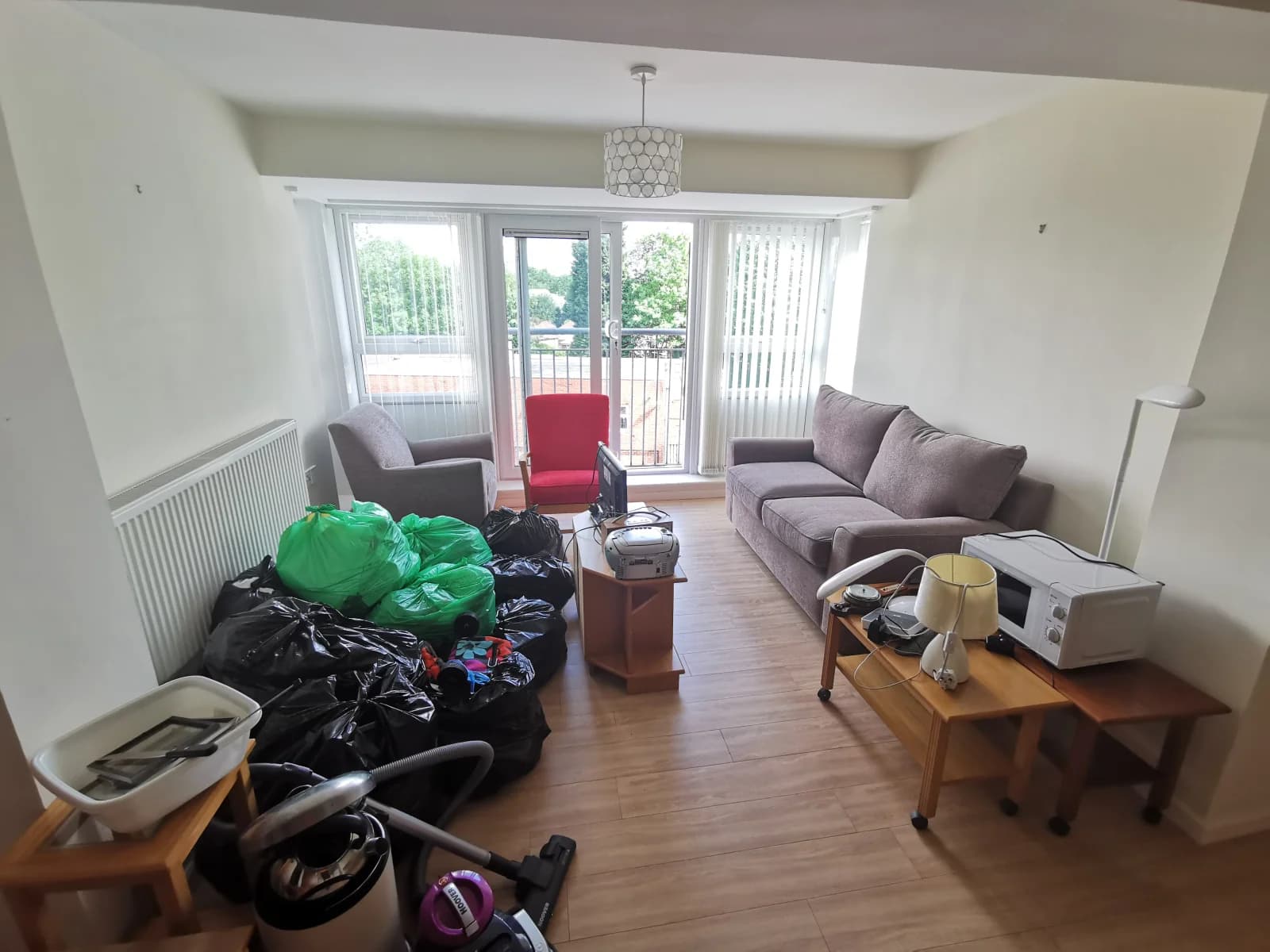
A full house clearance is not the same as booking someone to collect one sofa or a few bags. You may be handing over access to a whole property, dealing with a bereavement or tenancy deadline, or trying to clear years of household items without anything important being lost. The company you choose needs to be organised, properly licensed and clear about what happens to the waste afterwards.
The right questions help you compare companies properly. They also make it harder for vague or unlicensed collectors to hide behind a cheap price. Before you book, ask how the quote is worked out, what paperwork you will receive, where the waste goes and what the team needs to know before they arrive.
If you want to understand the whole journey first, start with our step-by-step guide to how house clearance works, from the first photographs through to loading, lawful disposal and completion evidence.
Quick answer
Before booking a house clearance company, ask for its waste carrier licence, where the waste will be taken, whether you will receive an invoice and Waste Transfer Note, what information the quote is based on, which items cost extra, what cannot be taken as standard and how long the clearance is likely to take.
Questions this article answers
How do I know if a house clearance company is licensed?
Should I choose the cheapest house clearance quote?
What should I send for a full house clearance quote?
Will I get a Waste Transfer Note after a house clearance?
Can a house clearance company take paint, chemicals or asbestos?
How long does a full house clearance take?
What happens to the waste after a house clearance?
Before you book, check you have:
- A waste carrier licence number you can verify
- A written quote based on photos and access details
- A clear answer on where the waste goes
- Confirmation of invoice and Waste Transfer Note paperwork
- A list of any items that cost extra or need separate handling
- Agreement on what stays in the property
- A realistic timescale for the full clearance
If you are already planning a full or part property clearance, our full house clearance service explains how The Waste Removers handle room-by-room clearances, lifting, loading, disposal paperwork and access planning.
Local house clearance pages
Why it pays to ask questions before booking a house clearance
Most house clearance problems start before the job begins. A price is given from one photo. The loft is not mentioned. Nobody asks whether the wardrobes and kitchen cupboards need emptying. A fridge, mattress or upholstered furniture is discovered on the day, and the quote suddenly changes. Worse, a cheap collector takes the load away and the customer has no proof of where it ended up.
A reliable company should be comfortable answering practical questions. They should be able to explain their waste carrier licence, likely disposal route, paperwork, access needs, price factors and any items that may need separate handling. If the answers are clear before you book, the day itself is usually much calmer.
10 questions to ask a house clearance company before booking
1. Are you a licensed waste carrier?
This should be the first question. Anyone carrying waste as part of a business needs to be registered with the Environment Agency as a waste carrier. If they are not licensed, you have no reliable way to know whether your items are being taken to a permitted site or tipped somewhere they should not be.
Do not judge this on price alone. A cheap quote is not proof of a problem, but a very cheap quote from someone who cannot show a waste carrier registration is a risk. If waste from your house is fly-tipped and traced back to you, you may still have to show that you took reasonable steps when choosing the collector.
Our guide to legal waste disposal and avoiding fly-tipping fines explains the customer duty of care in more detail, including how to check whether a carrier is registered.
2. Where does the waste go after collection?
A good house clearance company should not give a vague answer such as it goes to the tip. Ask which transfer stations or permitted sites they use, how mixed waste is processed, how recycling is separated and what happens to items that need specialist handling.
For a full house clearance, the load may include furniture, clothing, books, kitchen contents, carpets, electrical items, mattresses, fridges, garden items and general household waste. Not all of that follows the same route. Reusable items may be separated where suitable, recyclable material may be sorted, and specialist waste may need to be kept apart or charged separately.
3. Will I get a Waste Transfer Note and invoice?
Ask this before booking, not after the van has left. An invoice shows who carried out the work and what was charged. A Waste Transfer Note records the movement of waste and gives you confidence that the clearance was handled through a proper business process.
For probate, landlord, agent or estate records, that paperwork can be especially useful. Even when you are booking as a household customer, receiving clear paperwork is a good sign that the company treats disposal properly rather than as an afterthought.
Paperwork check
If a company is vague about invoices or Waste Transfer Notes before you book, treat that as a warning. The paperwork is part of the job, not a favour afterwards.
4. What information do you need to provide an accurate quote?
A full house clearance quote is only as good as the information behind it. The company should ask for enough detail to understand the volume, access, labour time and disposal costs. If they are happy to price a whole property from one hallway photo, expect gaps.
- Photos of every room, including bedrooms, bathrooms, hallways and utility spaces
- Photos of access to the property, including stairs, lifts, parking and distance to the van
- Whether fridges or freezers are included
- Whether mattresses are included
- Whether POPs furniture is included, such as sofas, armchairs or padded chairs
- Whether carpets need lifting
- Whether drawers, wardrobes, cupboards and kitchen cupboards need emptying
- Whether lofts, garages, sheds, cellars or outbuildings are included
- Whether anything is staying in the property and must not be removed
5. What affects the price of a full house clearance?
House clearance pricing is usually based on a mix of volume, weight, waste type, labour, access, disposal costs and any specialist waste charges. A small flat with easy parking is very different from a three-storey house with a full loft, long carry, heavy furniture and carpets to lift.
Some items usually cost more because of the way they have to be handled. POPs furniture, mattresses and fridges commonly incur extra charges because they need separate disposal routes or specialist processing. A transparent company should explain this before you book rather than adding unexplained extras at the end.
6. Is the cheapest quote always the best?
Not always, but cheap does not automatically mean bad. Some companies can offer a lower price because they are nearby, have efficient routing, or can resell or reuse suitable items from the clearance. That can reduce the amount treated as waste and sometimes reduce the final cost.
The warning sign is not the low price by itself. It is a low price with no clear explanation. Be cautious if the company is unlicensed, vague about disposal, cannot explain where waste goes, refuses to provide paperwork, or pressures you to book before you have had time to compare properly.
Cheap quote test
A fair cheap quote should still come with a licence, a written price, a disposal route and paperwork. If those parts disappear when you ask questions, the price is not the only thing to compare.
7. What items should I ask about before booking?
Most ordinary household contents can usually be dealt with as part of a standard clearance, but some items need to be flagged early. Ask about paint, chemicals, gas bottles, asbestos, tyres, sharps and anything hazardous or unidentified. These may not be standard clearance items and may need separate handling, a specialist contractor or a council route.
If you suspect asbestos, do not move it, bag it or break it up. Mention it before anyone attends so the company can give a proper answer. The same applies to old chemicals in sheds, medical sharps, fuel containers and gas bottles.
Ask first, not on the day
Paint, chemicals, gas bottles, asbestos, tyres, sharps and anything hazardous should be raised before the quote is agreed. They may need a separate route and may not be safe to load with standard household waste.
8. How long will the full house clearance take?
The timescale depends on the size of the property, how much needs removing, access, parking, stairs, whether cupboards and drawers need emptying, whether carpets are being lifted, and whether lofts, garages, sheds or outbuildings are included.
Many clearances can be completed in a day, but very full homes, difficult access or staged sensitive clearances may need longer. A good company should give a realistic time window rather than promising speed before they understand the job.
9. What happens on the day?
Ask the company to talk you through the day so you know what to expect. A well-run clearance usually starts with arrival inside the agreed time window, a walk-through before work begins and confirmation of what stays and what goes.
- The team checks access, parking and any agreed instructions
- Cupboards, wardrobes, drawers and kitchen units are checked if emptying is included
- Property protection is used where practical, especially around tight access points
- The clearance is worked room by room
- Items are loaded properly, with waste types kept apart where needed
- A reasonable sweep-up is carried out at the end, although this is not a deep clean
- Payment is confirmed in the agreed way
- The invoice and Waste Transfer Note are provided after completion
10. What are the red flags before booking?
A company does not need to have perfect marketing to be reliable, but it should be clear, traceable and willing to answer basic questions. Red flags include a very cheap price with no explanation, no waste carrier licence, vague answers about tipping or disposal, no clear company details, no written quote, no invoice or Waste Transfer Note, refusing to explain where the waste goes, poor or no reviews, and pressure to book immediately.
What information should you send for an accurate full house clearance quote?
Photos are usually the fastest way to get a fair quote. Send more than you think is needed. The aim is not to make the property look tidy, it is to show the job honestly so the company can price the labour, load size and disposal route properly.
| What to send | Why it matters |
|---|---|
| Every room | Shows the true volume and whether contents are loose, bagged, boxed or heavy. |
| Access photos | Stairs, lifts, tight hallways, parking and long carries all affect labour time. |
| Fridges and freezers | These usually need separate disposal and may affect the price. |
| Mattresses | Mattresses are commonly priced separately because of disposal and processing costs. |
| POPs furniture | Sofas, armchairs and padded seating may need separate handling because of POPs rules. |
| Carpets | Lifting carpets adds labour and changes the volume and weight of the job. |
| Cupboards and drawers | Emptying hidden storage takes time and can reveal items not visible in room photos. |
| Lofts, garages and sheds | Outbuildings often contain heavy, dusty or awkward items that change the quote. |
| Items staying | Clear instructions help prevent mistakes on the day. |
It also helps to say who will provide access, whether there are keys, alarm codes or building rules, and whether neighbours, agents or family members need to be kept informed. The more the company knows before arrival, the fewer surprises there are on the day.
Red flags to watch out for when comparing house clearance companies
When you compare quotes, look at the whole picture rather than the headline number. A clear quote should explain what is included, what may cost extra and what information the price is based on. If a company will not put anything in writing, that is a problem.
- A very cheap price with no explanation of what is included
- No waste carrier licence or reluctance to provide registration details
- Vague answers about tipping, transfer stations or disposal routes
- No clear company name, address, contact number or business details
- No written quote before the job
- No invoice or Waste Transfer Note after the job
- Refusing to explain where the waste goes
- Poor reviews, no reviews, or reviews that do not match the type of work you need
- Pressure to book immediately or pay cash before anything is agreed
Trust your reaction to the first conversation. If a company answers clearly, asks sensible questions and explains limits honestly, that is usually a better sign than someone who promises everything without looking at the details.
Booking a full house clearance with The Waste Removers
The Waste Removers quote full house clearances from photos, access details and a clear list of what is included. We are registered as a waste carrier, and completed jobs can be supplied with an invoice and digital Waste Transfer Note. If something needs separate handling, such as a fridge, mattress, POPs furniture or hazardous item, we would rather explain that before you book than surprise you afterwards.
If you are not sure what can be included, send the photos anyway and flag anything you are worried about. A useful quote should tell you what can be cleared, what needs separate handling and what information is still missing.
Ask before you book
Send photos of the rooms, storage spaces and access, plus any questions about fridges, mattresses, POPs furniture or hazardous items. We will explain what is included, what may cost extra and what paperwork you receive afterwards.